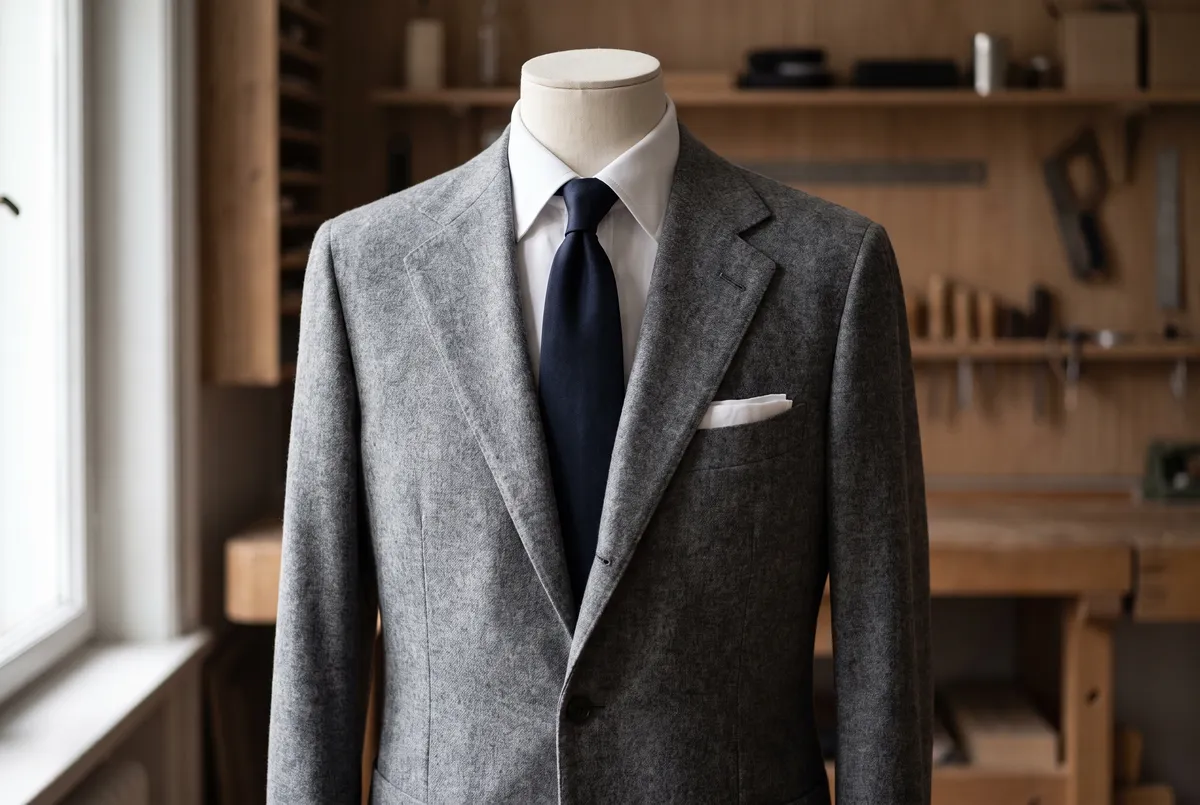
Winter is when the distance between well-dressed men opens up. Two men in much the same colour and much the same cut, and one of them looks cold while the other seems to carry his own warmth. Ask what separates them and there is only one answer. The cloth.
Let me put it plainly: what gives a winter wardrobe its depth is flannel, and the measure for choosing it is not the name of the cloth but its weight. Choose a light flannel and it will lose its shape in a single season. Choose one with real weight and you will keep it for a decade. That is where the difference lies.
Over many years advising businesspeople of every level — from owners and executives to those just starting out — I have watched some men fade in winter and others come into their own. This article exists to move you into the second group. The broader way of reading cloth is set out in The Essence of Cloth, and the two are meant to be read together.
Why Winter Separates the Well Dressed
Winter is the season in which material differences show most plainly. The reason is simple: the cloth gets thicker.
With thickness comes weight, and weight falls. The difference in drape is far greater than anything summer cloth can produce. When two men of the same build stand together and only one of them reads as a single quiet vertical line, that is what you are seeing.
The second thing is light. Interiors in winter are brightly lit and the sun outside sits low. Both are unforgiving about how a surface returns light. Thin, hard cloth throws it back sharply and reads as a flat shine; dense cloth takes the light in and returns it quietly. At any distance, what reaches the other person is not the colour but the way the light comes back.
Which is why winter is also the easier season in which to set yourself apart. In summer everyone is confined to light cloth and the field is narrow. In winter it is wide — and a wide field rewards the man who knows what he is looking at.
What Flannel Actually Is — The Nap Is Not the Answer
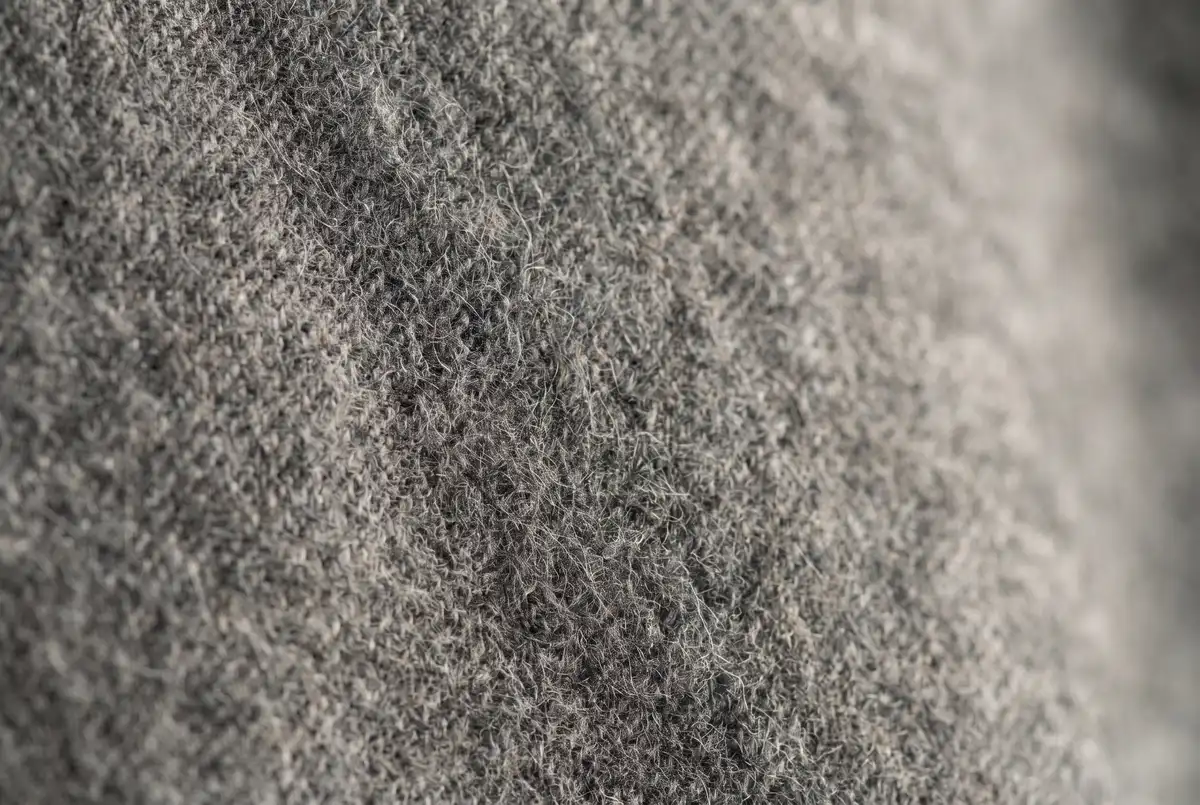
Flannel is a woollen cloth with a soft, raised surface. Most explanations stop there, but that description states the result rather than the cause.
The process that creates that surface is milling. The woven cloth is worked with moisture, heat and pressure until the fibres tangle and the structure tightens. Permanent Style, Simon Crompton’s British menswear publication, is explicit on this point in “The Guide to Flannel” (2017): what defines a flannel is neither the weave nor the yarn but the milling. Milling closes the cloth, and raising the surface afterwards produces that faint, hazy softness.
In other words, flannel is not the name of a weave. It is the name of a finish. Hold on to that and everything that follows becomes easier to judge.
The history is worth knowing too. Flannel is generally held to have been woven first in Wales, across the sixteenth and seventeenth centuries. Montgomeryshire in mid-Wales, and Newtown in particular, was long known as the heart of the Welsh flannel trade. As for the word itself, it is widely traced to the Welsh gwlanen, meaning woollen cloth, though the sound changes involved have led others to prefer an Old French origin in flaine. It is not settled.
One distinction saves a good deal of confusion. Cotton flannel — the cloth of shirts, pyjamas and bed sheets — is a different material altogether from the woollen flannel used for suits. Much of what you will find written about flannel concerns the former. Knowing which one you are reading about immediately improves the quality of what you learn.
One Cloth, Two Characters
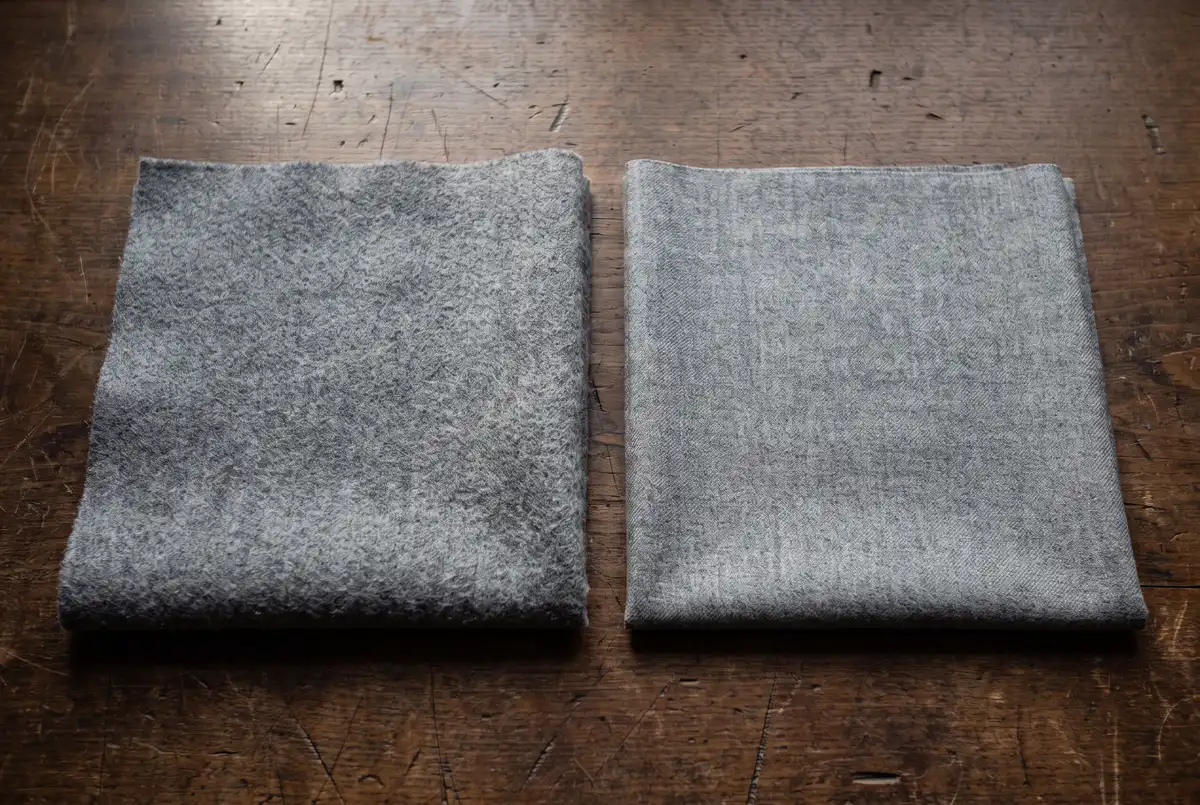
If flannel is a finish, then any cloth can be milled — and from that come two quite different flannels.
Woollen flannel is spun from shorter fibres, loosely twisted. It holds a great deal of air, which gives it body and warmth. The surface is hazy and the lustre restrained. When people picture flannel, this is what they picture.
Worsted flannel is spun from longer fibres combed into alignment. It responds differently to milling: the texture stays subdued and the finish comes out smoother. Because finer yarns can be spun, lighter flannels are almost always worsted. Among enthusiasts it is often said to lack the very qualities that make flannel worth wearing. The difference between the two yarns is covered more fully in The Essence of Cloth.
Here is how to decide between them. For a suit that will carry the depth of winter, choose woollen; for something you can begin wearing in early autumn, choose worsted. Warmth and texture, or crispness and lightness — that is the whole of the question. If you cannot decide, take the woollen. Doing what only flannel can do is what woollen flannel is for.
Weight Decides How Long the Cloth Lives
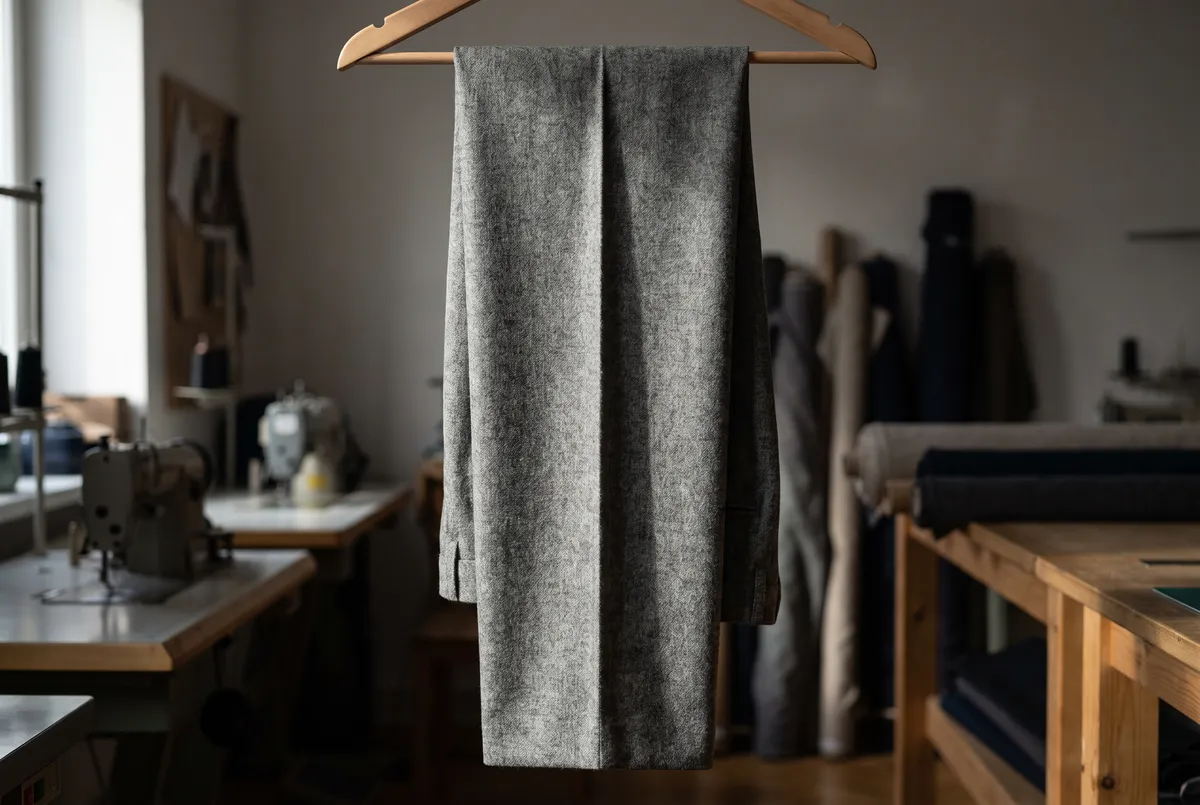
This is the part that matters most. Choosing flannel well comes down almost entirely to weight.
Cloth weight is given either in grams per metre or, in Britain, in ounces per yard. To put a real figure to it: Fox Brothers, the English mill whose flannel is among the best known in the world, lists its standard flannel at 14/15oz and 400/430g at a cloth width of 150cm.
Set that beside ordinary suiting. As The Essence of Cloth sets out, a typical autumn and winter cloth runs to something like 260–320g. Flannel sits in a heavier world than that. Even among cold-weather cloths, it is at the substantial end.
Why should weight matter so much? Because a light flannel loses its crease almost immediately. The knees go, the cloth lifts away from the body, and after a handful of wearings the shape is gone. Permanent Style notes that flannels which are light and loosely set lose their crease, bag at the knee and can even tear when wet, and advises choosing 13oz or more — ideally 15oz, and 11oz at the very least. In my own experience, most men who are disappointed by flannel did not buy a poor cloth. They bought a light one.
Region tends to follow the same line. English flannels are generally more closely set and use thicker yarn, so they come out heavier; Italian ones tend the other way, lighter and softer. The old advice to make your first flannel an English one rests on exactly that tendency.
Why Grey, of All Colours
Flannel means grey flannel. Other colours exist, so why has this one never given up its place?
Part of the answer is that grey flannel is never one colour. It is usually a melange — fibres of several different tones blended together within the yarn — so that up close you can see countless small points of colour. It never goes flat. Where a single flat grey reads as cold, a melange grey has depth. That is why it holds up under the hard light of a winter interior.
The other part is cultural. In 1955 Sloan Wilson published The Man in the Gray Flannel Suit; the following year it was filmed with Gregory Peck in the lead. The story concerns a man’s struggle inside corporate life, and the grey flannel suit came to stand for the uniform of the organisation man.
What is interesting is that half a century of that association has not diminished the cloth at all. A material once used as shorthand for conformity still sits at the top of the winter wardrobe. The reason is simple enough: it is genuinely good. Fashions and meanings move, but how a cloth returns light and how it falls do not. That is true of everything we call classic.
Know Its Weaknesses, and You Can Master It
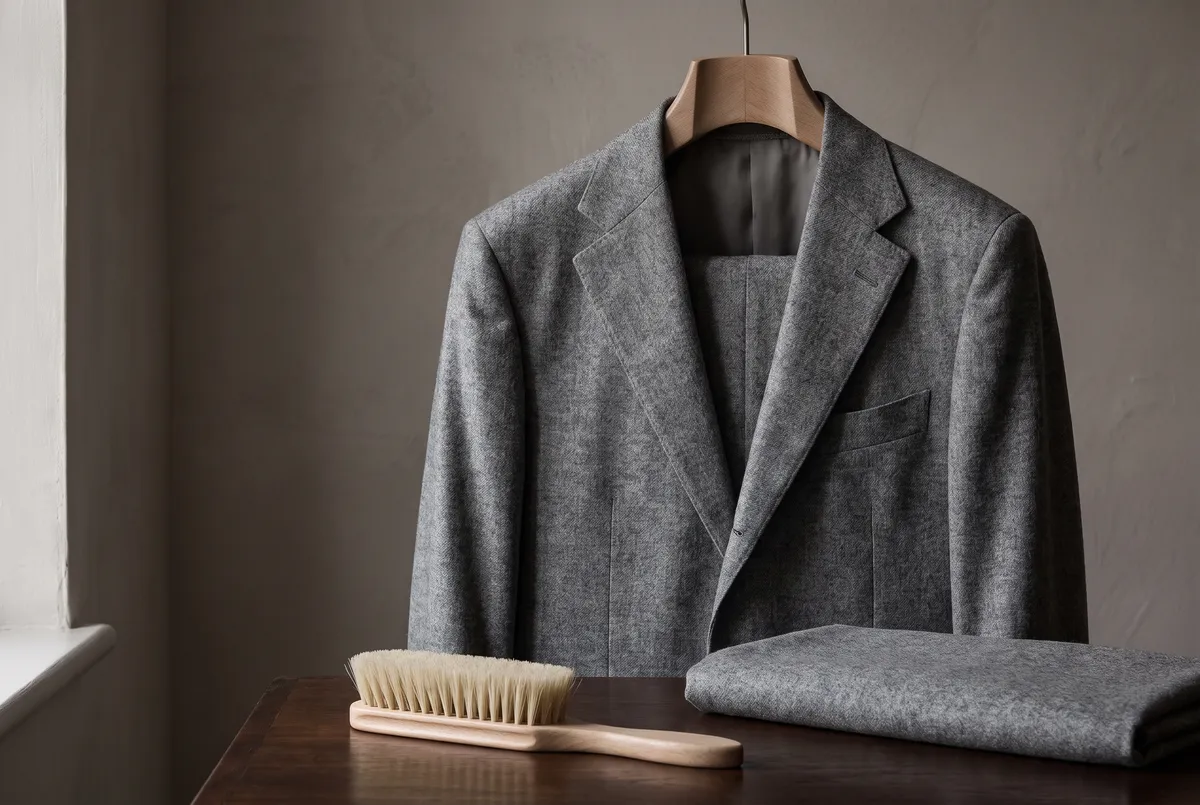
Flannel has real weaknesses. There is no point in hiding them, so here they are first.
It is vulnerable to abrasion. Because the surface is raised from short fibres, friction lifts it and pills form — along the inside of the sleeve, around the waist, wherever a bag rides.
It bags at the knee, and the lighter the cloth the more obvious it becomes, especially on days spent mostly seated.
It is poor when wet. Rubbed while damp, the cloth suffers. This is not the suit for a wet day.
Having said that, all three can be held in check by how you use it. Three habits do the work.
Do not wear it on consecutive days. Give it two days’ rest after each wearing. Simply allowing the wool time to recover its own shape makes a considerable difference to how long it lasts.
Brush it after wearing. A raised surface collects dust, dust invites friction, and friction makes pills. A soft, fine horsehair brush suits a napped cloth; simply sweep along the direction of the nap.
Have it pressed once during the season. Restore the crease and the whole thing comes back to life.
It is, without question, a cloth that asks something of you. It is worth it because what you get in return is a character no other cloth can offer.
When to Wear It, and When to Stop
Most accounts stop at “autumn and winter”. It is worth being more precise.
As a general guide, a heavier woollen flannel belongs to the months from November to February — the stretch in which its substance and warmth genuinely earn their place.
A lighter worsted flannel widens that to October through March. In the early autumn, when full winter weight is still premature, it is a useful thing to own.
If you are unsure, look less at the temperature and more at what the people around you are wearing. Once overcoats begin to appear, the woollen has its moment; before that, it is worsted territory. Dressing is never settled in isolation — it is settled in proportion to the room, a principle set out in The Essence of the Suit.
How to Choose Your First Flannel Suit
Knowledge is of no use if it does not end in a decision. So here is one.
Mid-grey, plain, woollen, around 14oz (400g), English. For a first flannel, nothing else comes as close to being impossible to get wrong.
Mid-grey, because darker reads heavy and lighter reads slight; the depth of the melange also does its best work at that value. Plain, because the surface of flannel already carries considerable texture, and adding a pattern on top of it tips easily into excess.
Around 14oz, because that is the dividing line between a cloth that holds its shape and one that does not. Below it, the problem of the knees stops being theoretical.
One caveat. This is a suit to buy after the foundations are in place. If a plain dark navy and a plain charcoal grey are not yet hanging in your wardrobe, buy those first. Keep to that order and flannel adds depth to how you dress. Ignore it and flannel becomes the suit you rarely reach for.
One more thing worth knowing: the quiet surface of flannel goes particularly well with a three-piece. Adding a waistcoat never makes it heavy; if anything it settles. On the floor, a closed-lacing shoe in leather with restrained polish meets the cloth on its own terms.
In Closing: Flannel Holds Its Warmth Quietly
Flannel does not assert itself. It does not catch the eye with lustre, and it says nothing through pattern. And still, a man wearing it reads as though he carries his own warmth into a winter room.
The order to look in is settled. Understand the surface that milling creates; decide the character by woollen or worsted; confirm its life by weight; and begin with a mid-grey melange. Hold its weaknesses in check by how you use it, and keep to the season. That alone will make winter a different proposition.
Some men fade in winter; others come into their own. What separates them is neither talent nor budget, but knowing the order in which to choose cloth.
The confidence you wear wins the game.
Frequently Asked Questions
Yes. In plain mid-grey or navy it will rarely present any difficulty in ordinary business settings. That said, a cloth with a raised surface reads a little softer than a crisp worsted, so it is generally held to be unsuitable for formal ceremonies and mourning. Think of it as a suit for meetings and everyday work.
There are three. The raised surface is vulnerable to abrasion and tends to fuzz and pill; cloth without enough weight bags at the knee; and the material suffers when rubbed while damp. All three can be held largely in check by not wearing it on consecutive days, brushing it after each wearing, and having it pressed once during the season.
As a general guide, a heavier woollen flannel belongs to November through February, and a lighter worsted flannel to October through March. Rather than watching the temperature alone, take your cue from whether the people around you have started wearing overcoats.
The raw material. Wool flannel is a woollen cloth with a raised surface, used for suits and trousers. Cotton flannel is a cotton cloth with a raised surface, used for shirts, pyjamas and bed sheets. The shared name means information about the two is easily confused.
Plain mid-grey. Fibres of several different tones blended within the yarn give the colour a depth that keeps it from reading flat under hard winter light. Because flannel already carries texture in its surface, it is better left without a pattern.