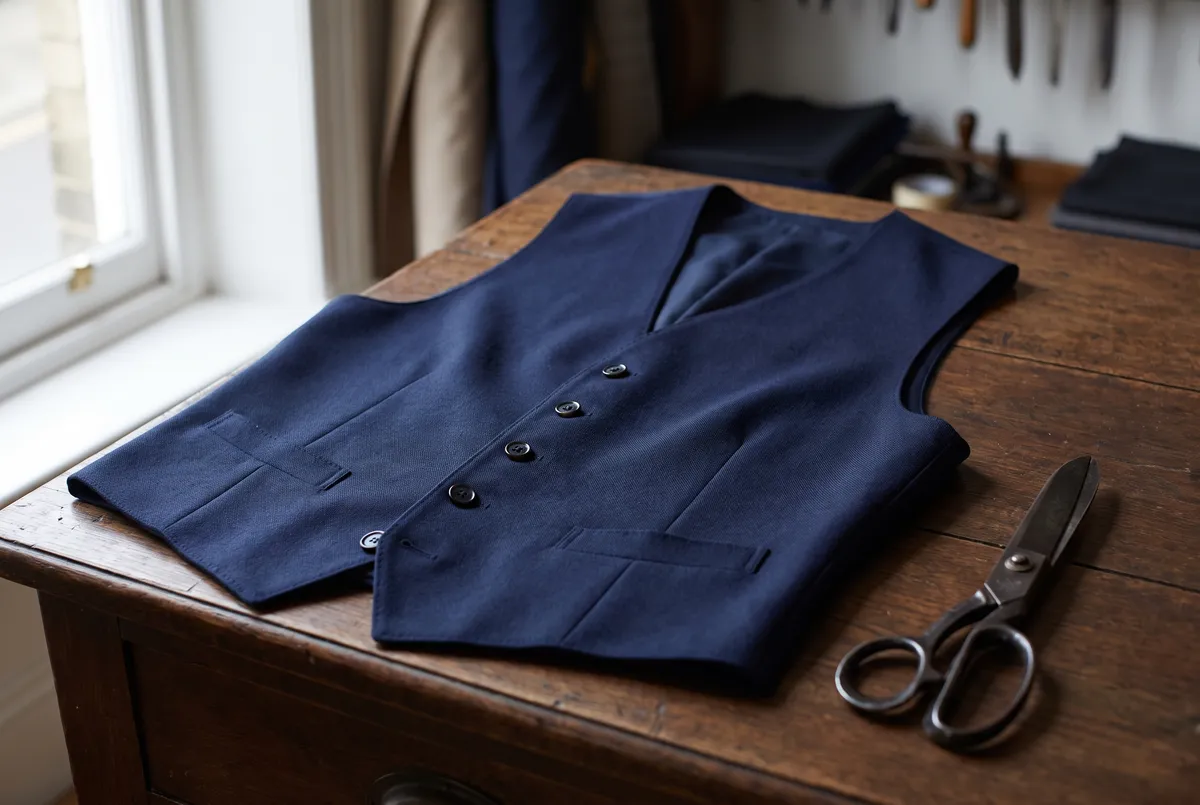
“Can I buy just the waistcoat?” — search for it, and you notice the answers run in opposite directions from shop to shop. One shop treats the request as ordinary. Another says it does not, as a rule, take waistcoat orders on their own. The same kind of question keeps drawing opposite replies, and it has done so for years.
The split is not a matter of inconsistent service. It comes from two separate questions being asked as one: whether you can buy it, and whether you can wear it. Once the two are pulled apart, this one garment becomes much easier to handle.
This piece is written for a reader who has already bought a three-piece suit and wants to buy the waistcoat again on its own, or wear it apart from the suit. It does not cover occasion-specific demand such as job-hunting or coming-of-age ceremonies. What follows answers, in order: whether buying it alone is practical, how to think about where it can be worn, and the basic points of wearing it well.
Ask If You Can Buy It Alone, and the Answer Depends on the Shop
On online consumer forums, the same kind of question keeps appearing: can the waistcoat that came with a suit be bought again on its own, later? “Yes, we take that order” sits alongside “No, we do not, as a rule, sell it separately” — answers that contradict each other across different shops and different years. (Posts of this kind can be found from 2009 through to 2025.)
What lies behind that contradiction is what the next sections work through, in order.
The Waistcoat Is Not a Third Accessory. It Is a Garment in Its Own Right.
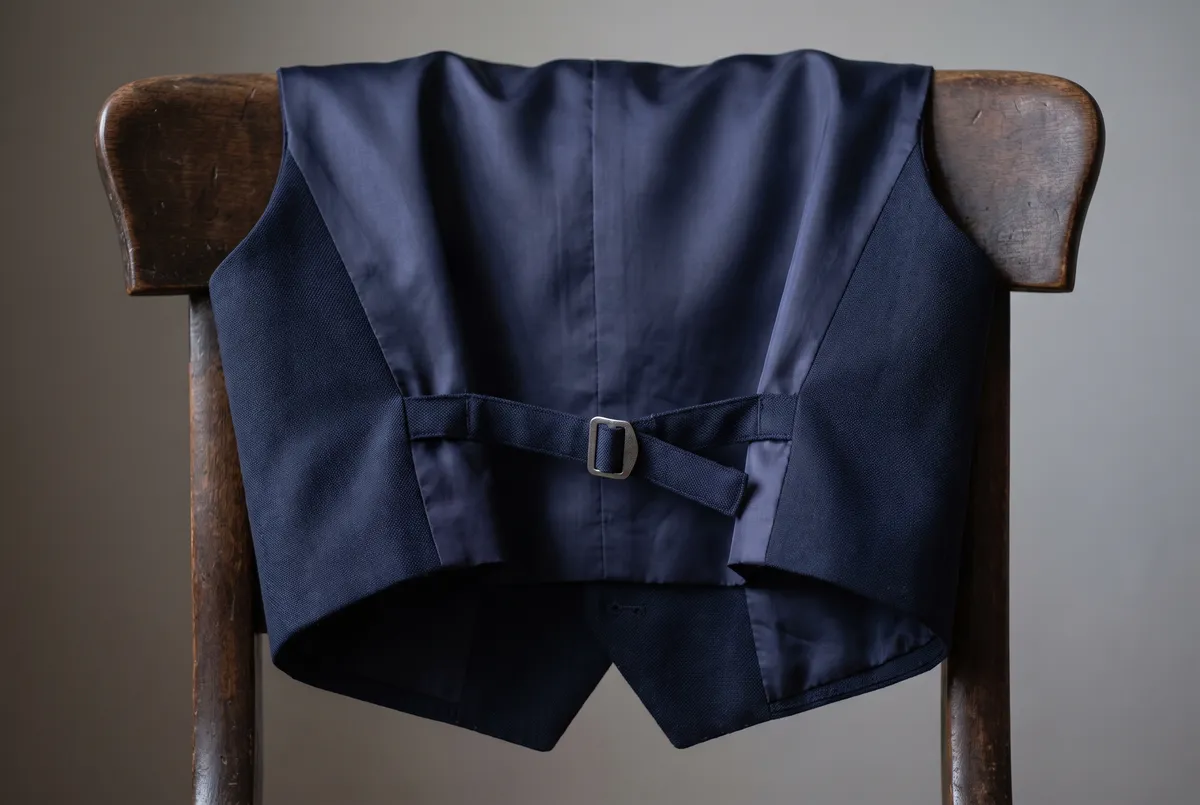
Before wearing it alone, there is a fact worth fixing in place. A waistcoat is made on the assumption that it will sit hidden beneath a jacket. The back is not usually cut from the same cloth as the front; it is finished in a separate material such as satin, with an adjustable strap — a cinch buckle. While the jacket stays on, no one sees this back at all. The moment the waistcoat is worn alone, that construction is exactly what shows.
The “separate material” meant here is purely a question of construction at the back, where it never shows while worn under a jacket. It is an entirely different matter from the choice discussed later — whether the front is cut from the same cloth as the suit or from something else. Keep the two apart: the first is a fact of make common to every waistcoat; the second is a matter of styling.
The Split in Answers Comes Down to Cloth in Stock
Back to whether it can be bought alone. The answer looking different from shop to shop, and from one year to the next, is not a matter of good or poor service. What changes is a single condition: whether the cloth used for the original order still remains in the shop’s stock at that moment.
A waistcoat needs far less cloth than a jacket or trousers. Given a request and cloth still in stock, a shop will often take the order on its own. But the same cloth runs down over time. There is no guarantee that the cloth from a suit bought several years ago still sits on the shelf today. Both answers — yes and no — are correct at the moment they are given. What moves is the stock, not the shop’s attitude.
Without the Same Cloth, Choose a Different One
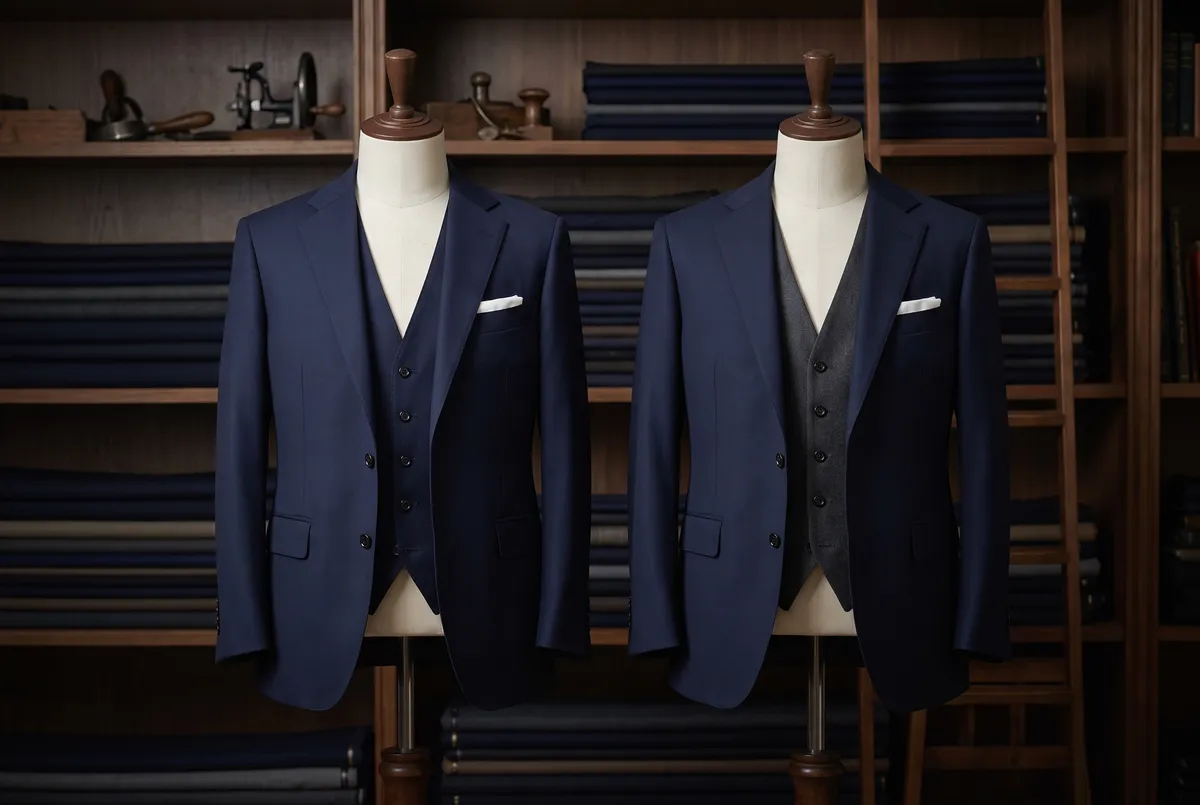
When the same cloth is no longer available, there is one path open: commission a waistcoat cut deliberately from a different cloth and colour. British tailoring has a name for a waistcoat cut from cloth other than the suit’s own: an odd waistcoat. Read this not as “I cannot match it, so I give up,” but as “not matching it is a choice in itself,” and the range of what this one garment can do widens.
How far that choice — the odd waistcoat — actually carries you is what the next two sections answer.
The Same Cloth Raises Standing by a Degree
From here, the question moves one step further: where can a waistcoat bought alone, or cut from a different cloth, actually be worn? Some existing sites do answer whether it can be bought at all. As far as I have been able to check, none go on to that further question.
A waistcoat cut from the same cloth as the rest — all three pieces from one bolt — does real work: it raises standing by a degree. My own view of why is this: cutting from the same cloth means securing enough of it in one go, either through a commission or by choosing a garment planned from the start as a three-piece set. The sum of that effort and outlay is what reads back through the dress.
This consistency of dress is weighed most heavily in conservative industries and in meetings that matter. In fields such as finance or law, where trust built over time is the work itself, or when meeting someone for the first time, a matching waistcoat is the safest choice you can make. If you bought the three pieces as a set, wear them as they came. That is the standard to build from.
What the other person reads from your dress is not the price of the cloth itself, but the amount of preparation behind it. Matching the cloth throughout can be taken as one of the clearest ways of showing that preparation.
A Different Cloth Can Still Work in Business, Depending on How You Wear It
The odd waistcoat, by contrast, sits a degree below the matching one in standing — but that does not mean it has no place in business. Bring its colour and texture close to the suit’s own tone, or build unity through the shirt and tie, and it works well enough in business settings. In fact, looking across shop floors, my impression is that more of the larger retailers and department-style menswear chains are stocking odd waistcoats on their own than before.
Let me set down my own practice here too. For meetings and negotiations that matter, I wear the matching waistcoat. A waistcoat worn alone, or in a different cloth, I keep mostly for private occasions such as parties. Take this as one man’s choice, not as a rule that an odd waistcoat has no place in business. The matching cloth is the safest choice; the odd waistcoat depends on how you use it. Within that, which you choose on a given day is a matter of the occasion, and your own judgement.
When in doubt, lean towards the safer choice. Choosing the matching cloth never costs you standing; an odd waistcoat that misreads the room can easily tip into looking as though you tried too hard. Behind the phrase “it depends on how you use it” sits exactly that much judgement, and it is worth saying so plainly.
Leave the Bottom Button Undone
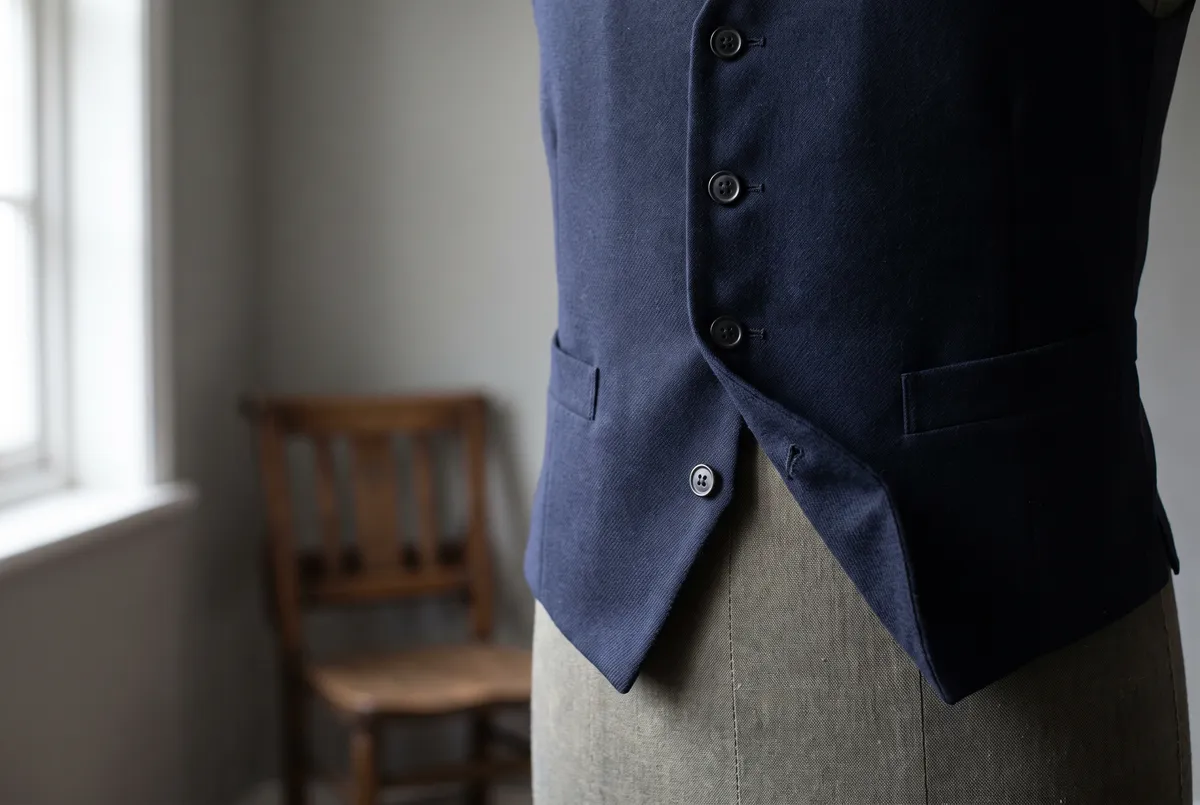
A word on how to wear it well. Leave the bottom button of a waistcoat undone. I treat this as a working rule of my own.
The reason is functional. Sit down, and the hem of the waistcoat is pulled whether you like it or not. Fasten it all the way and that strain shows straight through as creasing in the cloth. Leave one button open and the cloth is never forced, standing or seated. It is a simple point, and the effect is unmistakable.
Work the Colour Backwards from the Suit You Already Own
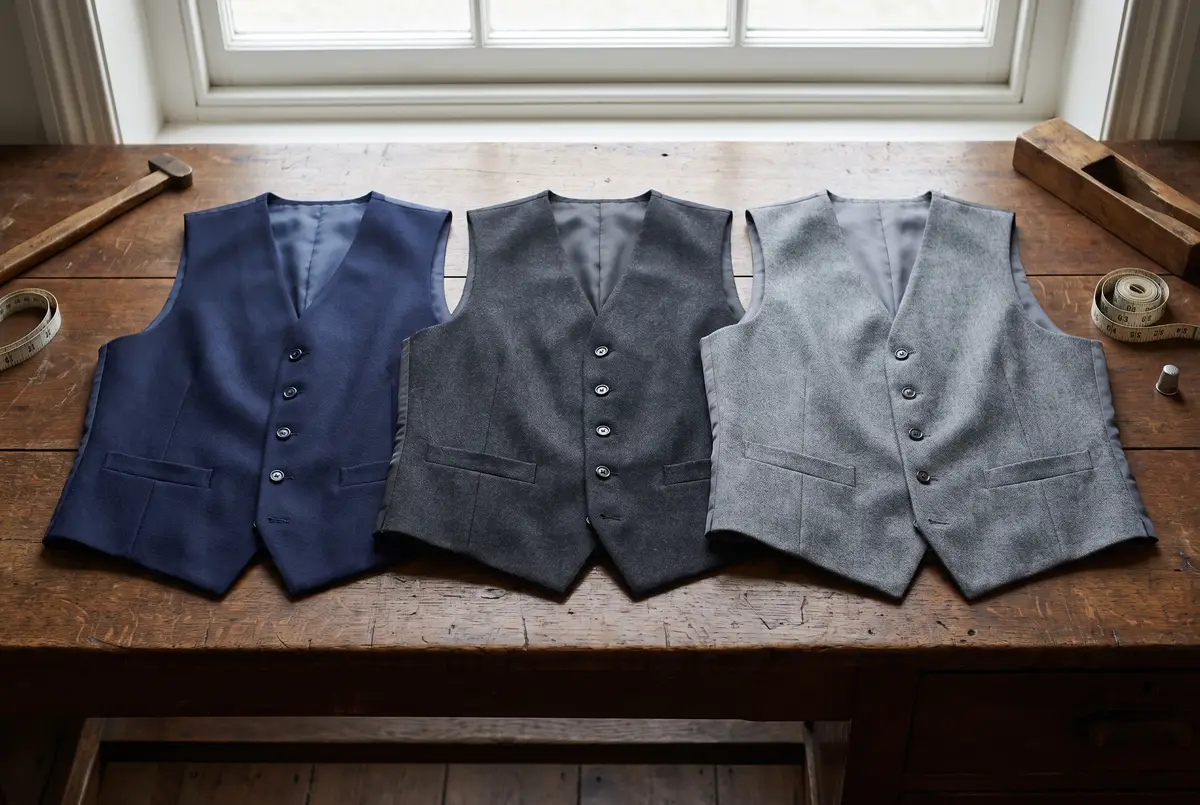
The quickest way to choose a colour is to work backwards from the suits you already have. As set out in why three colours are enough, colour is read by the other person before anything else. The waistcoat is no exception.
Matching the cloth starts with checking whether the shop you bought from still has the stock. Choosing a different cloth, start from a colour close in tone to the suit you already own — a charcoal grey waistcoat with a navy suit, for instance. A pairing that does not push the contrast too far tends to sit more comfortably in business.
A colour or pattern with a strong, visible contrast becomes a piece that speaks loudly on its own. If you choose a different cloth for business, the same principle applies as with the matching waistcoat: keep the tones restrained. Save a stronger contrast for private occasions.
In Closing: The Waistcoat Wears Two Faces — the Matching and the Different
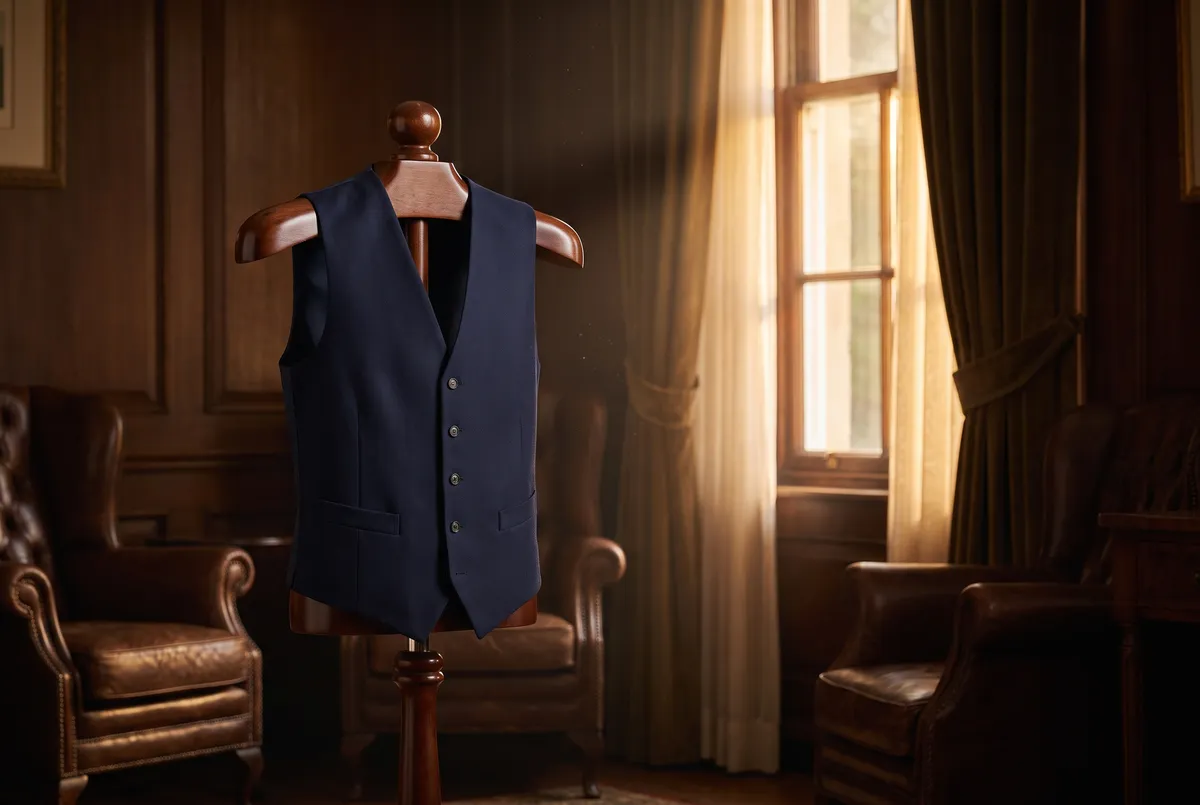
The waistcoat carries two faces: matching, and different. The matching cloth stands higher, for the effort and outlay it makes visible, and is the safer choice in conservative settings. A different cloth sits a degree below it, yet works perfectly well in business depending on how it is put together. Whether you can buy it alone comes down to stock; whether you can wear it comes down to how you match it. Keep those two questions apart, and this one garment opens up considerably.
The confidence you wear wins the game.
Frequently Asked Questions
Yes. A waistcoat needs far less cloth than a jacket or trousers, so a shop will often take the order on its own if the cloth is in stock. This does depend on the same cloth from your original order still being available, and it can run out over time. When it has, cutting a waistcoat from a deliberately different cloth — an odd waistcoat — is another way forward.
A waistcoat cut from the same cloth as the suit reads as the higher-standing choice, since securing that much cloth in one go takes real effort. In conservative industries or important meetings, the matching cloth is safest. An odd waistcoat sits a degree below it, but works well enough in business when you bring its colour and texture close to the suit’s own tone, or build unity through the shirt and tie.
No. Leaving it open is a practical rule that keeps the cloth from pulling when you sit down.
Work backwards from the suits you already own. To match the cloth, check with the shop whether it is still in stock. To choose a different cloth, start with a colour close in tone to your suit — that keeps it comfortable to wear in business.
No, not usually. A waistcoat is made on the assumption that it will sit hidden beneath a jacket, so the back is typically finished in a separate material such as satin, with an adjustable strap. This never shows while the jacket is on, but worn alone, that construction becomes visible.