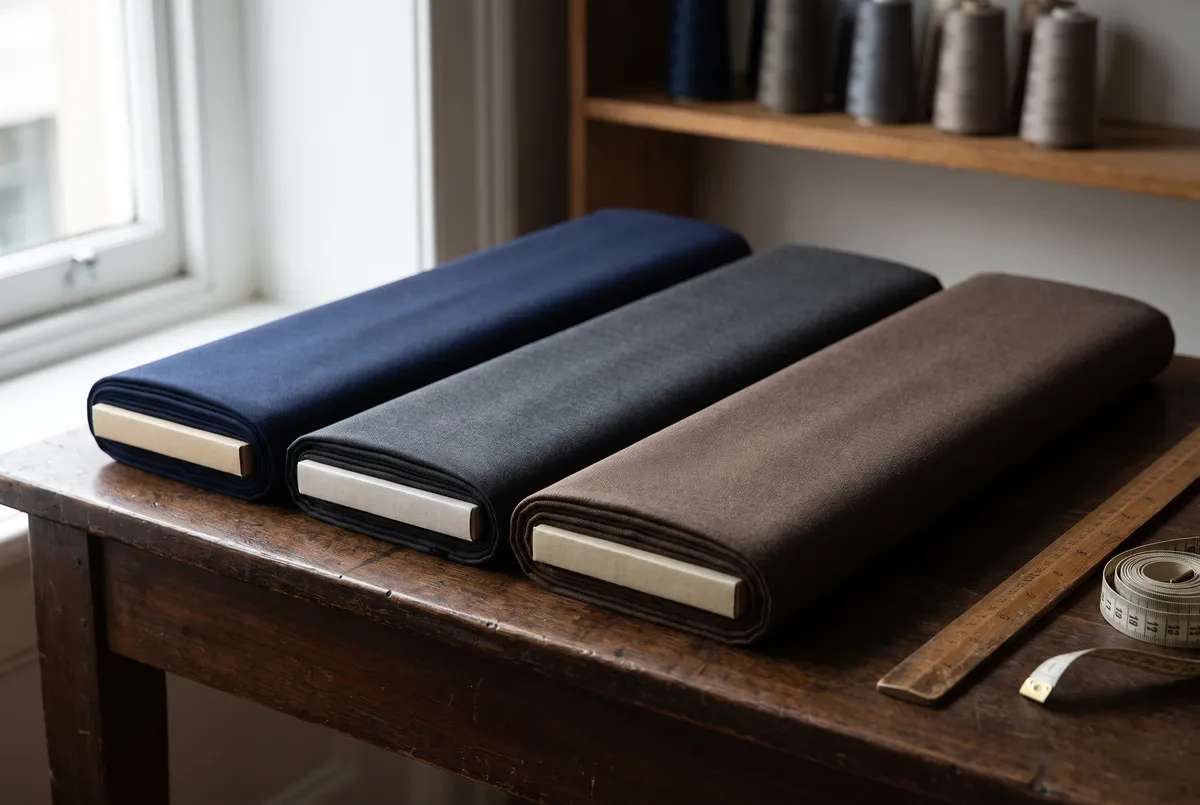
Set two suits of the same cut and the same colour side by side, and one of them can still look plainly the better of the two. We tend to credit the tailoring. But at any distance, the thing doing the work first is almost always the cloth.
Let me put it plainly: what decides the impression a suit makes is not the label and not the price, but the cloth. And the measure for choosing cloth is not the size of the number on the ticket. It is what you intend the suit to do.
Over many years advising businesspeople of every level — from owners and executives to those just starting out — one thing has become clear to me. The men who set themselves quietly apart all look at the cloth. Before they learn a single brand name, they touch it, hold it to the light, and feel its weight. This article exists to hand you that way of seeing, as a system.
Why Cloth Decides the Outcome
Across a negotiating table or from a lectern, the other person first takes you in from several metres away. At that distance no one can see the number of buttons or the fineness of the stitching. What reaches them is how the light comes back and how the cloth falls — which is to say, the cloth itself.
Good cloth does not throw light back sharply; it returns it quietly, from within. Cheap cloth bounces light off its surface into a flat shine. That difference registers before the colour does. It is why two navies can read so differently — one deep and settled, the other thin and glassy.
The second thing is the drape. Cloth has weight and body, and these decide the angle at which it hangs along you. Cloth that falls straight from the waist carries your outline quietly downward. Cloth that is too light lifts away from the body and sways as you move, blurring that outline. Standing, in dress, is a matter of a quiet outline — the same principle at work in the essence of the suit and in the three-piece — and cloth is what supports that outline at the root.
So choosing cloth is not a question of style. It is a question of whether you can design, yourself, the first thing another person receives.
Why Wool Is the Principal Cloth
Many materials go into suits, but the one at the centre has never changed. There are clear reasons why wool has held that place for centuries.
The wool fibre carries a fine waviness called crimp, which behaves like a spring. Pull it and it extends; release it and it returns. That elasticity is what brings the cloth back from creasing. Wear a suit through a day of sitting, hang it overnight, and the creases draw out — that behaviour comes from the shape of the fibre itself.
It also takes up a great deal of moisture before it feels wet to the touch. It is why, in a humid meeting room, the cloth does not cling to you the moment you perspire. The crimp also traps layers of air between fibres, so the same thickness holds more warmth.
In short, wool combines in a single fibre the recovery, moisture handling and warmth that hold a suit together across a working day. Man-made fibres have real strengths in lightness, price and crease resistance, and blends are widely used to shore up wool’s weaknesses. Wool remains at the centre because nothing has been found to replace that combination.
For a first suit, start with a cloth that is principally wool. This is not a point on which you need to deliberate.
Worsted and Woollen — The Same Wool, and Nothing Alike
Wool is one word, but the way the yarn is made changes its character completely. Knowing this is the first step in learning to see cloth.
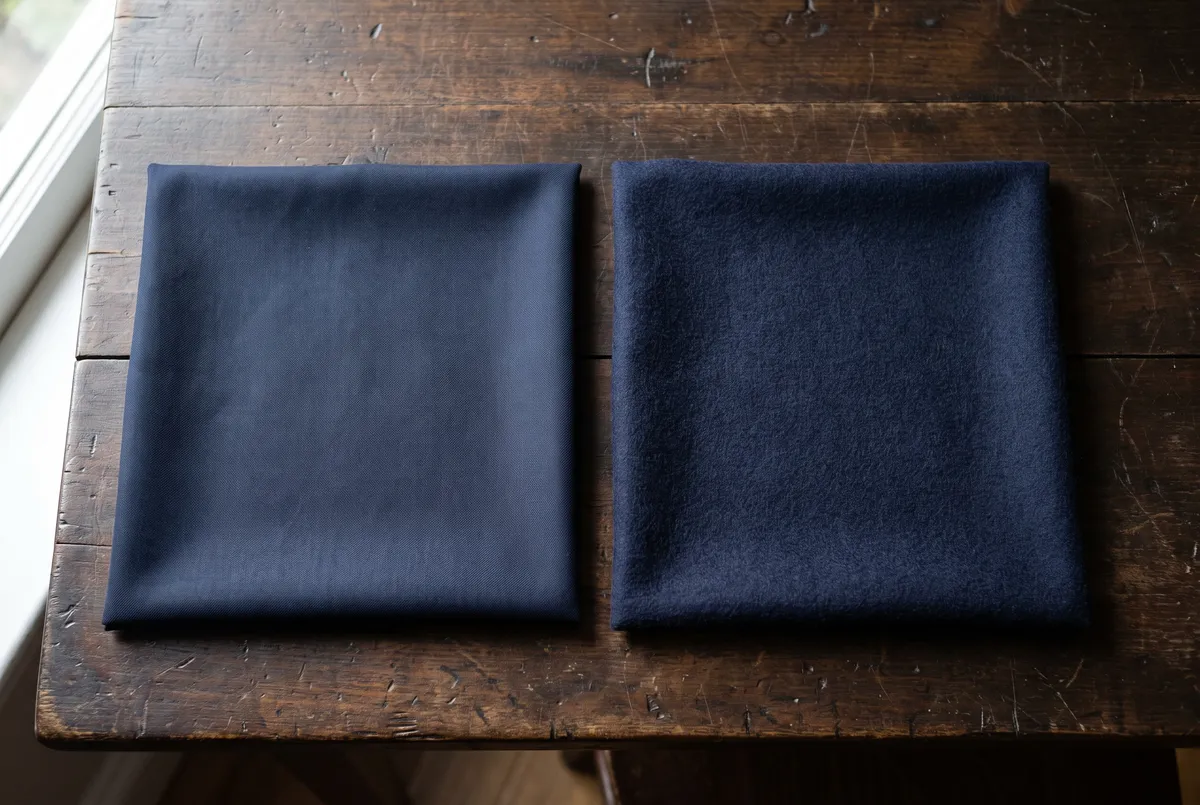
Worsted yarn is made by selecting only the long fibres, combing them parallel, and spinning them tightly. Because the fibres lie in order, the surface comes out smooth and carries a refined sheen. It holds a crease for a long time, it is light, and it is durable. The great majority of business suiting is worsted.
Woollen yarn keeps the shorter fibres in and is spun loosely, without bringing every fibre into line. It holds more air between the fibres, which gives it loft and warmth. The surface is raised and soft, the sheen restrained. In return, it holds a crease poorly. Autumn and winter flannels and tweeds are frequently made from woollen yarn.
The rule for choosing is simple. Worsted for crispness and a crease that lasts; woollen for warmth and texture. For a cloth that will carry you through the year, choose worsted. Consider woollen when you want to add depth to autumn and winter. Think in that order and you will not go wrong.
The weave plays its part in the surface too. A plain weave, one thread over one, finishes dry and light; a twill, with its diagonal rib, drapes better and wears harder. If two cloths feel different in the hand, it is the yarn, the weave, or both.
What the Number on the Cloth Is Telling You
You will have seen a marking such as “Super 120’s” on a selvedge or a price ticket. Knowing exactly what that number means makes decisions in the shop far easier.
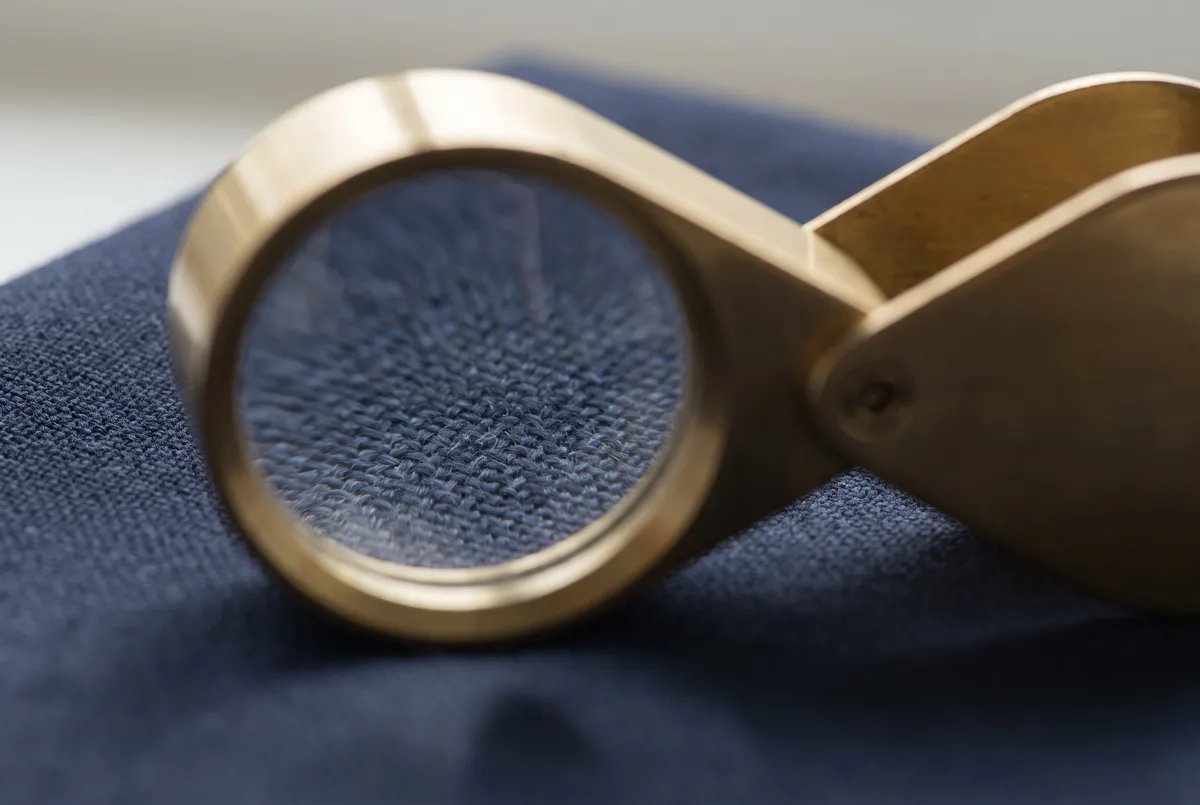
The marking states how fine the wool fibre in the cloth is. It follows the fabric labelling code of practice of the International Wool Textile Organisation (IWTO), under which every step of ten lowers the permitted maximum mean fibre diameter by half a micrometre. Super 100’s corresponds to 18.75 micrometres, 120’s to 17.75, 150’s to 16.25 and 180’s to 14.75.
What is worth holding on to is this: the number describes fineness of fibre, not a ranking of one suit against another. Finer fibre does give you something coarser fibre cannot — a smoother hand and a more delicate sheen. Fineness is a genuine and important component of quality.
It is also, by the same token, more delicate. Finer filaments leave less material at the points of stress, so the cloth takes abrasion less well, creases fall out more slowly, and the places that rub begin to shine sooner. The more often you wear it, the more that shows.
Which gives you the rule. For the suit you put on several times a week, Super 100’s to 130’s is the easiest range to live with. It is amply good cloth, and it stands up to travelling and sitting. For a suit kept for ceremonies and particular occasions a few times a year, the sheen and softness of a higher number come into their own; worn seldom, delicacy is hardly a fault.
The number is not your adversary. Decide the purpose first, and there is hardly a clearer guide to be had. Change the order from number-first to purpose-first, and choosing cloth becomes remarkably plain.
Weight — The Figure a Tailor Reads First
Ahead of the name of the fibre and ahead of its fineness, one figure sets the character of a cloth: its weight. When I look at cloth in practice, this is the first thing I check.
Weight is usually given in grams for one metre of cloth at roughly 150 centimetres wide. The ranges I work from run as follows. Spring and summer cloths sit around 200 to 250 grams; autumn and winter cloths around 260 to 320; and the cloths that carry you through the year around 240 to 270. Region and weave move these figures about, but simply knowing the order of magnitude sharpens your judgement.
Why should weight matter so much? For two reasons.
The first is that it all but settles which season the cloth belongs to. Call two cloths wool and they may still be worlds apart: 200 grams and 300 grams are not worn at the same time of year. The belief that “wool is for winter” is what happens when nobody mentions this number.
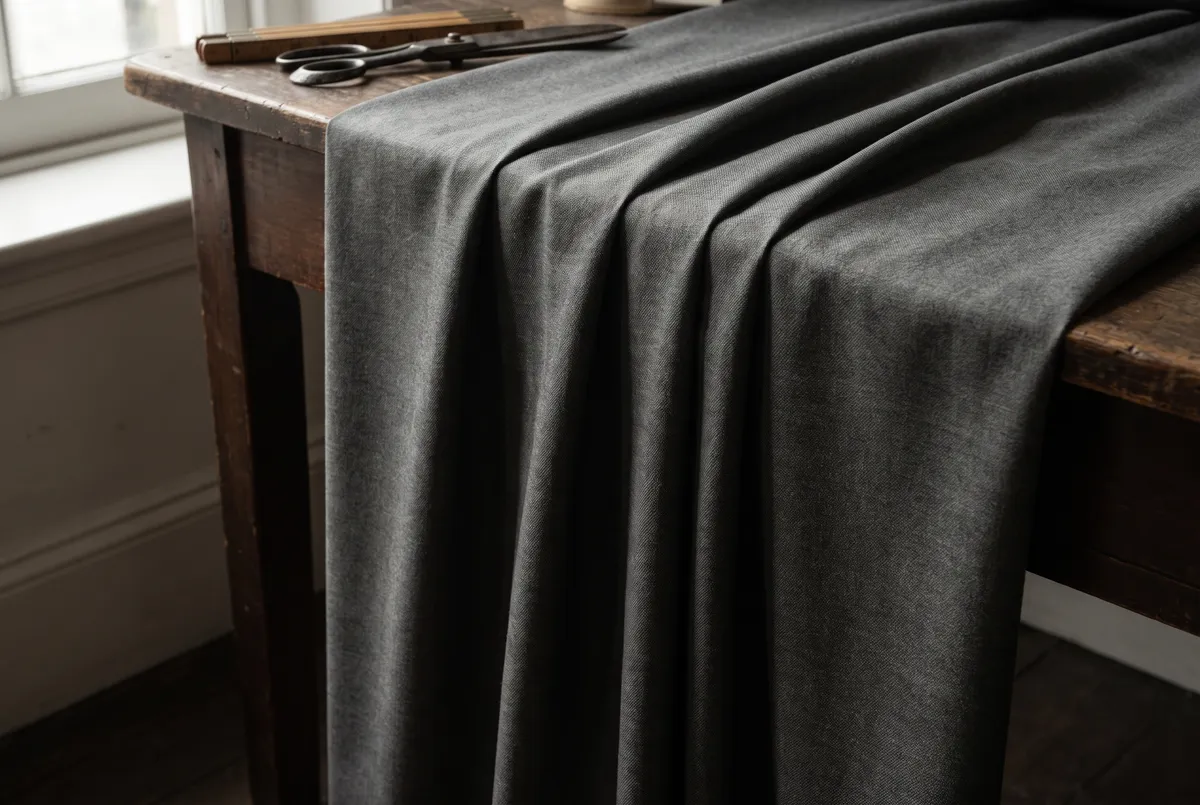
The second is the drape described earlier. The heavier the cloth, the straighter it falls. Light cloth is cool and comfortable, but it lifts away from the body and softens your outline. Heavy cloth follows you down and draws a quiet vertical line. When dress of high standing looks, without fail, composed, this weight is doing the work.
For the suit that will do the year’s work, take about 250 grams as your mark. Outside the height of summer and the depth of winter it wears comfortably, and the drape is amply there. Ask for this figure where cloth is sold and you will almost always be told it. Simply becoming a person who asks widens what you are able to choose.
Three Regions, Three Characters
In wool cloth, three regions matter more than the rest: Biella in Italy, Huddersfield in England, and Bishu in Japan. Each sits on good water, and water governs the quality of dyeing and finishing. That these regions grew up beside rivers is no accident.
They are not better and worse. They are different in character.
English cloth has body and substance, and it is hard-wearing. The outline comes through clearly and reads with weight. It is a plain, sturdy character, made on the assumption that you will wear it for a long time.
Italian cloth is marked by softness and sheen. It is light, it follows the body, and the drape has grace in it. Put the same navy beside an English one and the way the lustre sits is plainly different.
Japanese cloth — above all from Bishu, centred on Ichinomiya in Aichi Prefecture — is even and exact, and its weaving has been built up around the Japanese climate and the Japanese frame. That exactness is decided in the finishing. The surface runs smooth, and the colour holds clean the length of the bolt.
There is no general answer to which you should choose. There is, though, a guide. England when you want weight to hold a room, Italy when you want grace and lightness, Japan when you value steadiness and everyday use. Treat region not as a grading of materials but as a choice about what you mean to say.
Cloth That Puts the Season on Your Side
Once the workhorse is settled, it is worth reaching for the cloths of the seasons. This is where depth enters the way you dress.
Flannel is an autumn and winter cloth with a raised surface, soft in its warmth and composed in its look. The restrained sheen is precisely what gives it depth. How to choose one is set out in The Essence of Flannel.
Tweed is a heavier cloth of thicker yarns, plain in its handle and hard-wearing. Rather than the mainstream of business dress, it suits being used as a jacket to vary the look.
Linen is a summer material with fine breathability and moisture handling. Opinion divides on whether its readiness to crease is a fault or a cool kind of character. The more at ease a man is in his clothes, the more likely he is to enjoy it as the latter. How to choose one is covered in The Essence of Linen.
Mohair, taken from the Angora goat, has a distinctive crispness and lustre. It is most often blended into wool to hold lightness and shape together.
Seasonal cloth is not what you choose for a first suit. Added once the classics are in hand, it gives the way you dress the depth of a season. Each of these deserves its own treatment, and will have one here in time.
How to Choose Your First Three Suits
Knowledge laid out in rows is worth nothing if you still cannot choose. So here, from all of the above, are the first three to own.
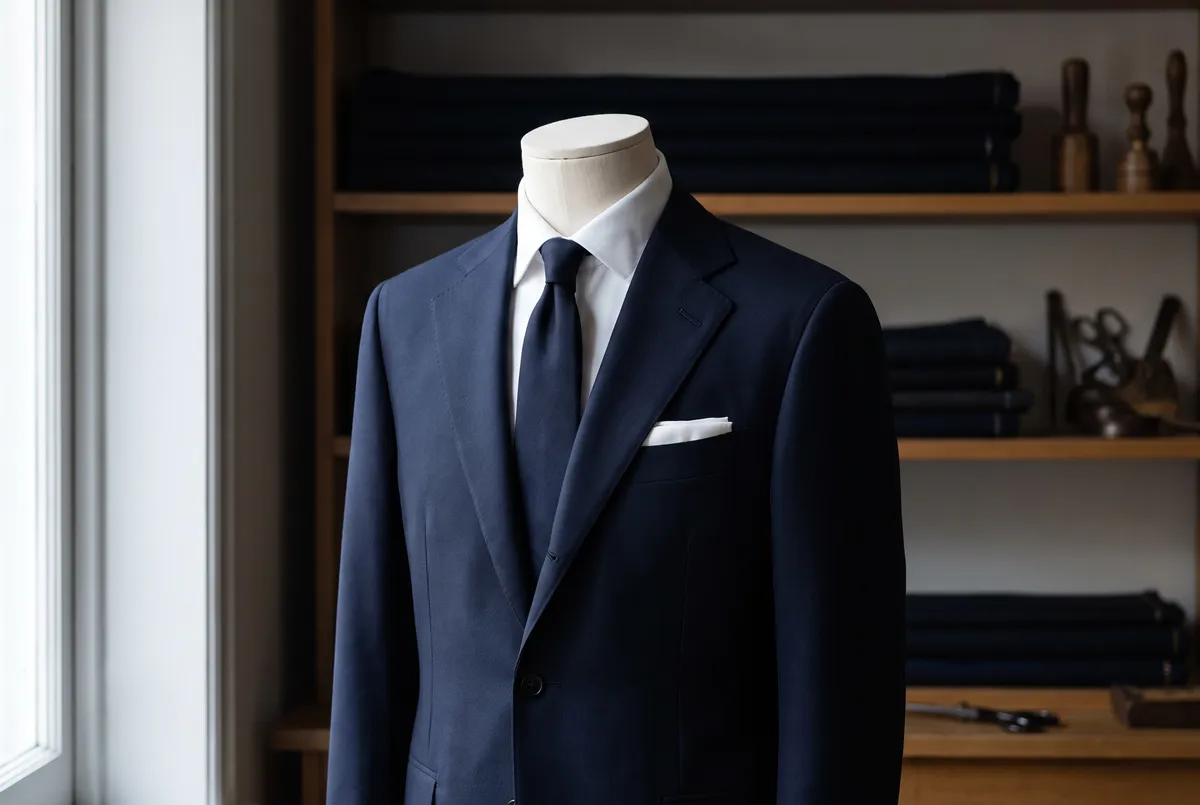
The first is solid dark navy. Worsted, around 250 grams, Super 100’s to 120’s. This is the one you will wear most, so put durability ahead of delicacy. It alone will carry you through most of what you face, from negotiations to ceremonies.
The second is solid charcoal grey. The specification can match the first. Where navy speaks of sincerity and youth, charcoal speaks of composure and weight. The further you go in years and in responsibility, the more often it is called for.
With the third, you add texture for the first time. A weave you only notice on looking closely, or flannel for autumn and winter. Only here do you reach the point of playing with cloth.
Keep to this order and no suit is wasted. Most men who go wrong in dress begin at the third. Cloth with character is appealing to look at, but added without a foundation beneath it, the whole never comes together.
One more thing: to get everything out of good cloth, the shirt and the shoes have to be its equal. A suit of fine cloth above a pair of tired shoes is the greatest waste of all.
In Closing: Cloth Speaks Quietly
Cloth does not raise its voice. It does not announce itself the way a logo does, or catch the eye the way a loud colour does. And still, when someone takes you in from several metres away, what reaches them first is the cloth.
The order to look in is settled. Choose principally wool; decide the character by worsted or woollen; confirm season and drape by weight; and read the number only after you have decided the purpose. Choose the region to suit what you mean to say. Hold to those five and you are out, entirely, of the state in which a price tag and a brand name were all you had to go on.
The bearing of a suit lives in its material. And that bearing carries to the other person far more accurately than the man wearing it tends to imagine. Some men lose ground by the way they dress; others have learned to see cloth. What separates them is neither talent nor budget, but knowing how to look.
The confidence you wear wins the game.
Frequently Asked Questions
Decide the purpose first, and choose material, weight and fineness from there. For a suit worn several times a week, take a principally wool worsted at around 250 grams, with a fineness marking in the Super 100’s to 130’s range. For a suit worn only occasionally, such as for ceremonies, finer and more lustrous cloth comes into its own.
It states how fine the wool fibre in the cloth is. Under the code of practice of the International Wool Textile Organisation (IWTO), every step of ten lowers the permitted maximum mean fibre diameter by half a micrometre: Super 100’s is 18.75 micrometres and 120’s is 17.75. It is a measure of fineness, not a ranking of one suit against another.
Worsted is spun from long fibres combed parallel and tightly twisted, giving a smooth surface, a refined sheen and a crease that lasts. Most business suiting is worsted. Woollen keeps the shorter fibres and is loosely spun, so it holds air and gains loft and warmth. Flannels and tweeds are frequently woollen.
It is how heavy the cloth is, usually given in grams for one metre at roughly 150 centimetres wide. As a guide, spring and summer cloths run around 200 to 250 grams, autumn and winter cloths around 260 to 320, and year-round cloths around 240 to 270. It governs both which season a cloth belongs to and how it falls along the body.
Yes. Linen for summer, mohair for crispness and lustre, and blends with man-made fibres for lightness and crease resistance all have clear advantages. That said, wool combines recovery, moisture handling and warmth in a single fibre, so a principally wool cloth remains the surest choice for a first suit.