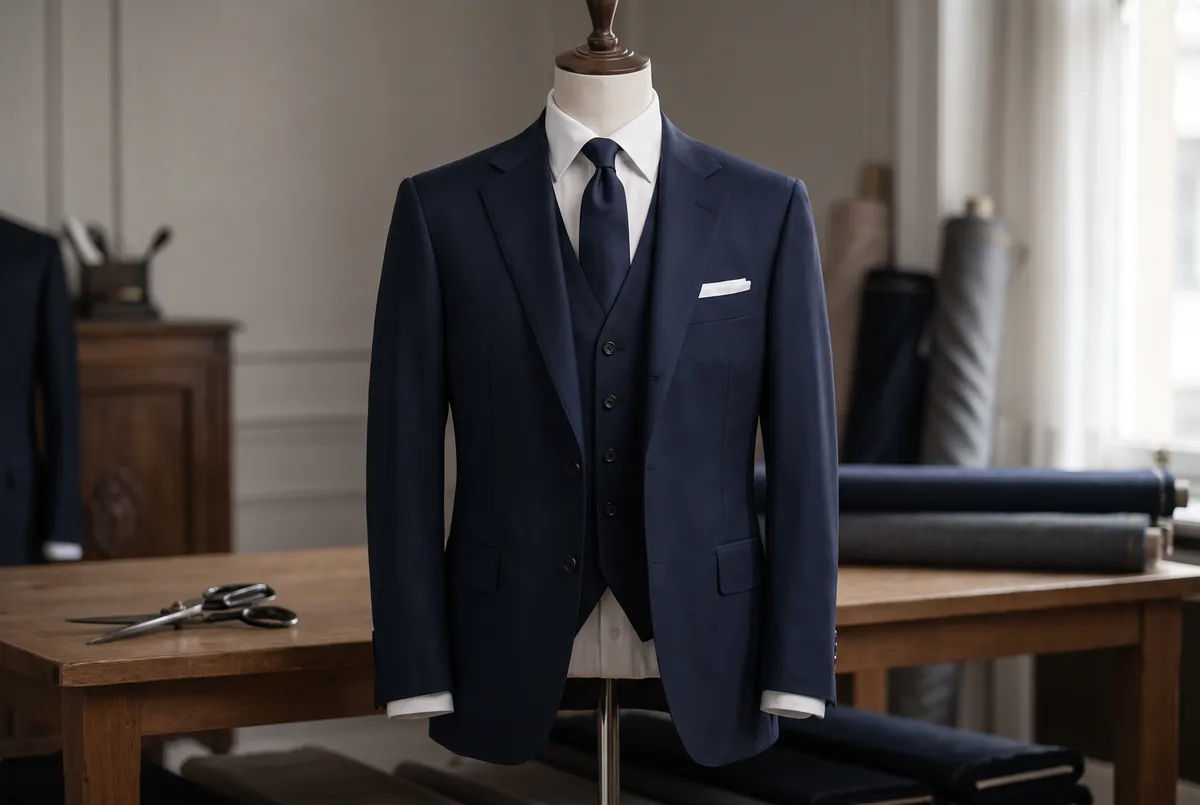
"Isn't a three-piece a little too much?" — the doubt that keeps many men from ever trying one. Type "three-piece suit" into a search box and the words that appear beside it are "rude," "tacky," "etiquette." You want to wear one, but you are afraid of looking out of place. That very hesitation names the essence of this way of dressing.
Let me put it plainly: the truth is the opposite. Worn with understanding, the three-piece is the single most reliable way to raise your standing in business dress by a full degree. It looks out of place only when the wearer borrows its flourish without knowing what it is for.
Over many years advising businesspeople of every level — from owners and executives to those just starting out — one thing has become clear to me. The men who set themselves quietly apart do not reach for loud colors or rare labels. They use, quietly, the structural power of the three-piece.
What a Three-Piece Suit Really Is: The Decisive Difference from a Two-Piece
A three-piece suit is a jacket and trousers joined by a waistcoat cut from the same cloth. Where a two-piece is jacket and trousers alone, the three-piece adds one matching panel over the torso. It looks like nothing more than "one piece more," yet it changes the completeness of the whole.
It is a waistcoat in British English, a vest in American English, and a gilet in French — different names for the same thing. One distinction is worth drawing. A waistcoat cut from the same cloth as the suit, and an odd waistcoat in a contrasting fabric, have different reasons behind them. The former is a legitimate component that tightens the whole; the latter is a choice that adds variety to your dress, worn where the occasion allows for it. This article is about the former — the matching waistcoat. For how to choose and wear an odd waistcoat, see The Essence of the Waistcoat.
Why does one piece more matter so much? Because that single piece covers the center of the body.
The "Rude" and "Tacky" Myth, and Where It Comes From
Why do "rude" and "tacky" cling to the three-piece? There are two reasons.
The first is that the two-piece has become so standard in Japanese business that the three-piece now reads as "dress for a special day." It is most often shown as attire for a wedding guest or an after-party, and that image breeds the assumption that it is "too heavy for everyday business."
The second is the sight of one worn badly. A waistcoat that does not fit, floating at the chest; a shirt or belt peeking out beneath it — see a "wrong three-piece" once, and the whole look reads as clumsy. That memory settles into the word "tacky."
But neither is a problem of the garment; both are problems of how it is worn. The three-piece has never been the outlier here; it is the fuller form of ordinary business dress, not a departure from it. The key to dissolving the myth is to understand what the waistcoat was born to do, and how it works.
The Essence of the Waistcoat: Its Origin, and How It Governs the V-Zone
Why It Was Born
The waistcoat traces back to the seventeenth-century court. In 1666, King Charles II of England set a fashion for his court and wore it himself: a coat, a long vest beneath it, and breeches to the knee. That set is generally regarded as the ancestor of the modern three-piece. The purpose given at the time was to teach the nobility thrift: his court had been keeping pace with French fashion, which had cost the English dearly in money and in pride. But the garment itself covered the center of the body with a single panel, and it entered the world at court, where a man's position was always on show. From the first, the waistcoat was a component for composing one's standing.
The modern suit descends from that three-part form; the simplified form keeping only the coat and trousers — the two-piece — is what spread as everyday wear. In order of things, the three-piece is the original, and the two-piece is that original with one piece removed.
Why It Raises Your Standing
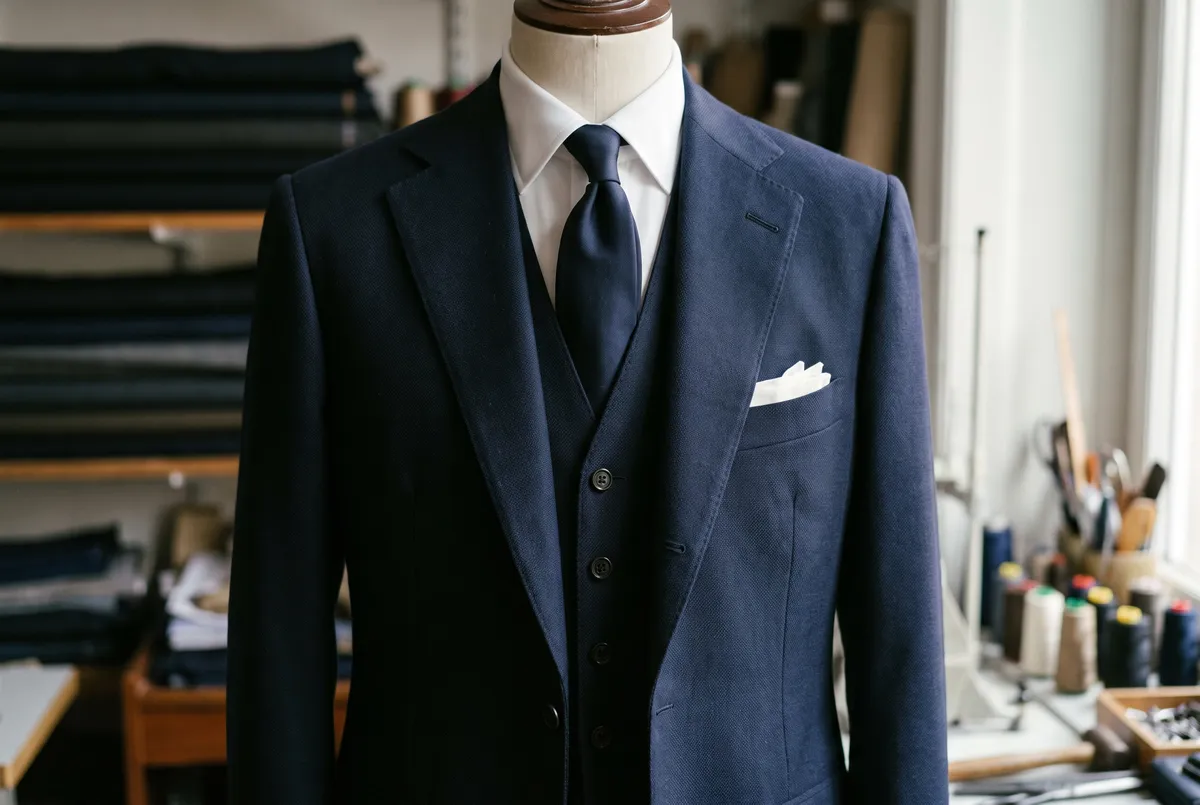
The reason the waistcoat tightens a look is structural. Open the front of a jacket and what is normally exposed is the shirt, the tie, and the belt — different materials and colors, made to look busy at the center of the body. Set one matching waistcoat there, and the plane from chest to stomach runs in a single color; the eye travels cleanly downward.
In dress, standing means closing the plane and quieting the line. The same principle runs through the collar of a shirt, the facing of a shoe, the lapel of a suit: the fewer the elements and the quieter the outline, the higher the standing. The waistcoat covers the center of the torso — the part most apt to look busy — with a single panel, and settles the balance of the whole. That is why the front can open, and you can sit, without the look coming apart. That is what makes the three-piece a complete way of dressing.
The Etiquette of the Buttons
There is one point of etiquette worth knowing. Leave the lowest button of the waistcoat undone. A widely repeated anecdote holds that King Edward VII of England, being stout, left his bottom button open, and those around him followed. Whatever the truth of the tale, leaving the bottom undone lets the front settle naturally and keeps the cloth from pulling when you sit. It endured as etiquette because it is sound. Observe this one point and you look, at once, like a man who knows.
Why Executives Choose the Three-Piece
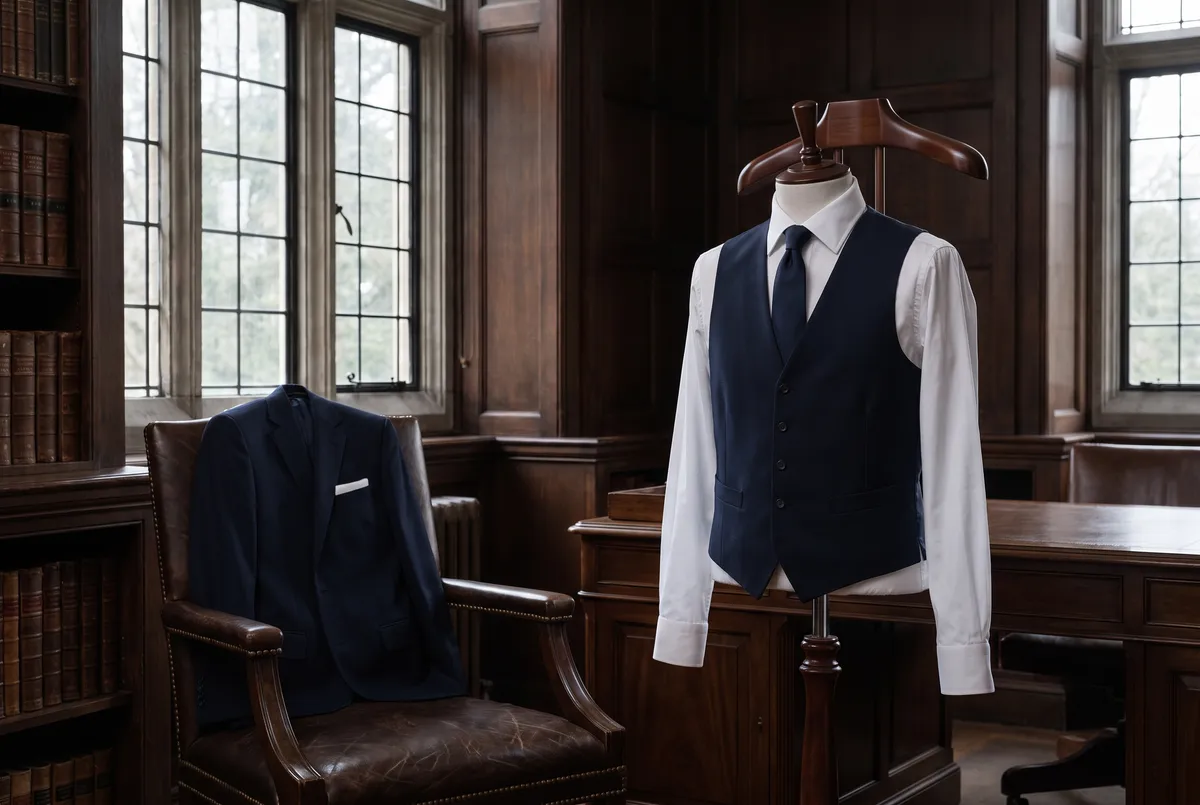
The better a man's standing in dress, the more he reaches for this one at the decisive moments. The reason is not flourish; it is that it does not come apart.
Long meetings, receiving visitors, taking the stage — a business day is a succession of moments when the jacket comes off. A two-piece becomes "a man in a dress shirt" the instant the jacket is removed, and the standing held until then drains away at once. A three-piece keeps its waistcoat when the jacket comes off. You are never down to a shirt alone; the backbone of the look holds. It does not fall when the jacket comes off — that is the foremost reason a busy executive chooses the three-piece.
The second is your bearing when seated. Negotiations and meals are spent longer sitting than standing. Sit, and the front of the jacket opens; in a two-piece, the center of the torso loosens. Because the waistcoat keeps tightening the torso, a three-piece holds its outline even seated. What your counterpart watches longest is not your standing figure but the seated one across the table. To not come apart there is worth a great deal.
It does not stand out by flourish; it leaves no gap, whatever moment is caught. That is the kind of confidence the three-piece gives.
Three-Piece or Double-Breasted: Which Carries Higher Standing?
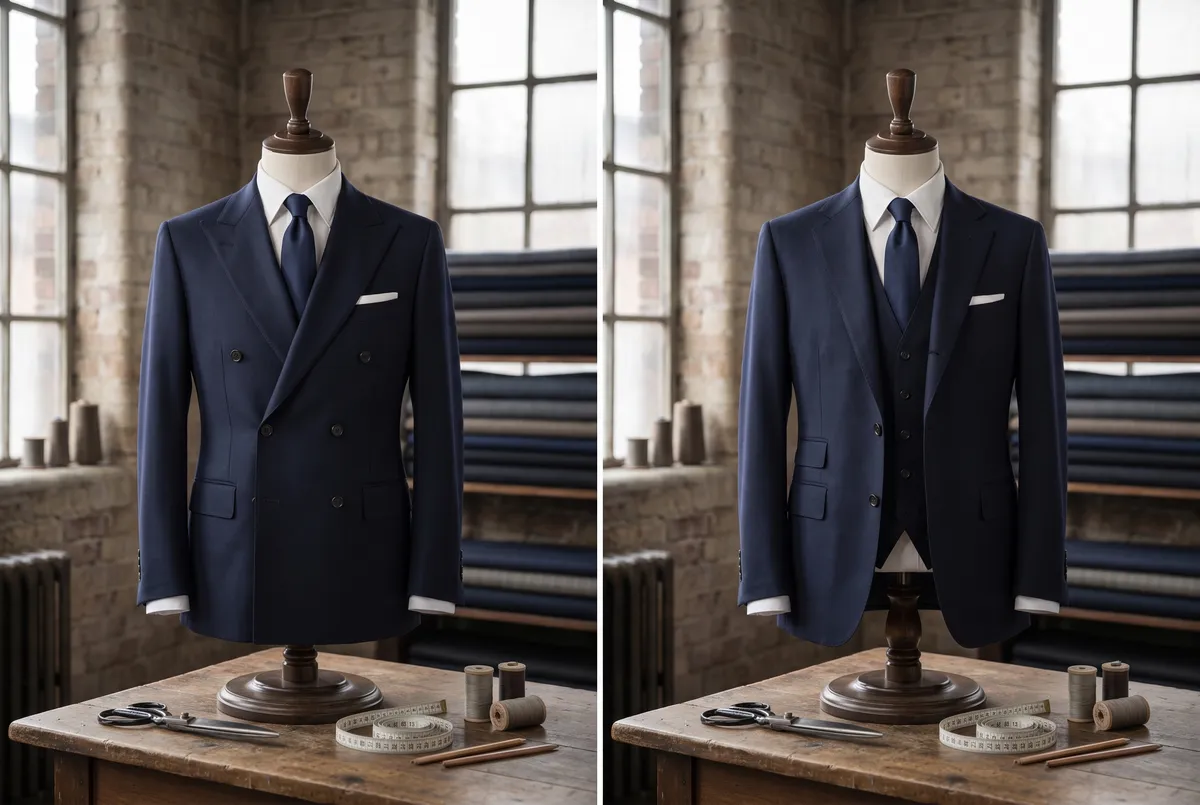
The better a man knows dress, the more he runs into one question here. There is another way to dress a degree above the two-piece: the double-breasted suit. So which carries higher standing, the three-piece or the double-breasted?
Let me say it plainly: there is no deciding, once and for all, which is above. The practical way to see it is that the two are different answers to the same problem. Standing in dress rises by tightening the center of the torso, as said; the three-piece solves this with a single waistcoat. The double-breasted achieves the same closing of the center with the jacket alone, by lapping the fronts deeply into a double layer. So a waistcoat is not layered under a double-breasted jacket. The overlapped fronts already cover the torso, and the waistcoat would be redundant.
Since their role is the same, it is better to choose by what you want to say than to rank them. What the double-breasted gives off is authority and gravitas, a presence with mass. The three-piece speaks of poise, completeness, an absence of gaps. When you want to command the room by gravitas, the double-breasted; when you want to build trust by an intelligent poise, the three-piece — using them this way is, I find, more fruitful than agonizing over which ranks higher.
How to Choose: Cloth, Make, and Fit
From my years of experience, let me narrow the points that keep you from going wrong to three.
Begin with a Plain, Near-Solid Classic
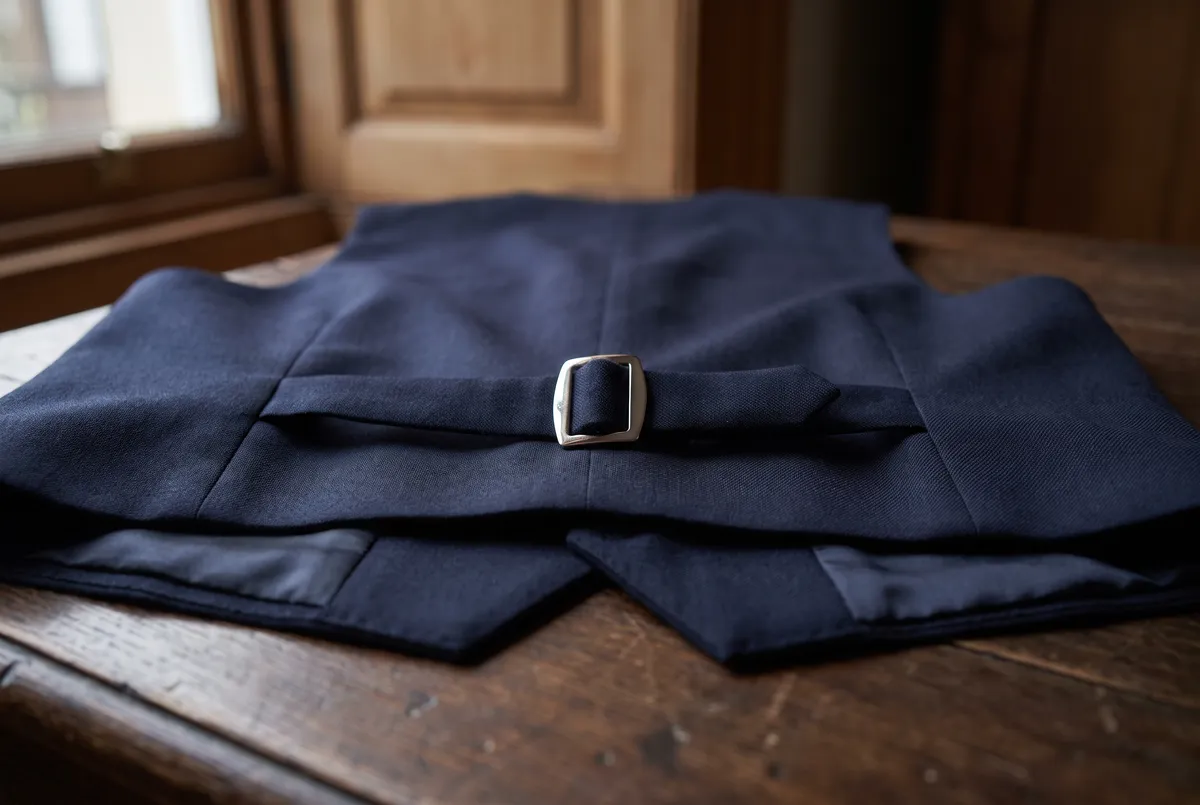
For a first one, do not play with color or pattern. Solid dark navy or charcoal gray — or a weave so subtle you notice it only on close inspection — is the most versatile. A three-piece already carries a great deal of information, so the quieter the cloth, the more refined it reads. Bold stripes and bright colors can wait for a second or third, once you have the essentials in hand.
The Make Shows in the Waistcoat's Back
It is easily overlooked, but a difference in standing shows in the back of the waistcoat. A back tailored in the same cloth — a "full back" — is the most formal, and draws out the poise of the three-piece to the fullest. A "cutaway" back finished in lining or a separate cloth is a practical make, breathable and easy to move in, and it is the mainstream today. This is not a matter of better or worse; simply keep in mind that at the moments that demand the most standing, the full back in matching cloth shows a degree finer. A back with an adjustable strap — a cinch buckle — lets you fine-tune the waist so the fit follows the body. When you try one on, always take the jacket off and check how the back and sides of the waistcoat alone sit.
Fit Means the Plane Does Not Float
The biggest reason a three-piece looks clumsy is a waistcoat of the wrong size. A waistcoat works only when its plane closes along the body. Let the cloth float at the chest or the flank and the piece that should tighten instead loosens the whole. Length matters too: the correct length is one where the hem of the waistcoat fully hides the belt. A shirt or belt showing when you sit or move is proof the length falls short. Whether this is right decides whether the same cloth reads as first-rate or third-rate.
To Belt, or Not to Belt
Braces (suspenders) serve a three-piece better than a belt, for two reasons. A belt buckle makes a slight bulge beneath the waistcoat and disturbs the very plane of the torso you have just tightened. And braces lift the trousers to their proper place at the waist, so the hem of the waistcoat and the top of the trousers meet with no gap and no shirt shows.
That said, a belt is not a mistake. In modern business many wear one without any trouble, and that is fine. Even then, choose a slim buckle and a waistcoat long enough to hide the belt completely. Whether you compose the foundation where it cannot be seen — the presence or absence of that awareness is what quietly separates a finished three-piece from an unfinished one.
When to Wear It, and When Not To
The three-piece shines most at the decisive moments of business, where you want to show standing. An inaugural or incoming address, an important negotiation or deal, taking the stage or presenting, a formal ceremony. In any moment where you want to convey at a glance that this is a man in order, the three-piece works, quietly. As a wedding guest, too, it passes as legitimate dress.
There are, on the other hand, moments to avoid it. Where the room is plainly casual, on long outdoor calls under the height of summer, at a funeral — in any of these the three-piece can be too heavy, out of season, or too resplendent. A funeral especially: to keep ornament to a minimum is the courtesy, and a look with one piece more runs against that principle. High-standing dress and dress fit for the occasion are two different things. The better a man knows the power of the three-piece, the better he knows the moments not to wear it.
In Closing: One Waistcoat Becomes the Backbone of Your Dress
The essence of the three-piece lies in a structure: it covers the center of the body with a single panel and does not come apart, whatever moment is caught. Born at court to compose one's standing, it tightens the busyness of the V-zone and holds its standing when the jacket comes off. Not "rude," not "tacky" — worn correctly, there is no component that raises your dress a full degree so reliably.
What matters is not to borrow its flourish. Choose a classic cloth, fit the back and length of the waistcoat, and leave the bottom button undone. Hold to these basics and the three-piece becomes the backbone of your dress. While some lose ground by how they dress, others wield this one panel quietly. The difference is not talent; it is only whether you know the essence.
The confidence you wear wins the game.
Frequently Asked Questions
It is worn to cover the center of the body with a waistcoat and raise the completeness of the whole. Because your standing does not drop when the jacket comes off, and the torso does not come apart even seated, it is especially powerful in business settings — meetings and negotiations — where you want to hold a composed impression for a long time.
A jacket and trousers alone is a two-piece; add a matching waistcoat and it becomes a three-piece. Historically the three-piece is the original form, and the two-piece is that original with the waistcoat removed. The presence or absence of the waistcoat is what divides the standing and completeness of the look.
Worn correctly, it is not rude — it is legitimate dress that shows standing. It can, however, be too heavy where the room is plainly casual, or at a funeral. When it looks rude, the cause is almost always how it is worn — a poor fit, or a hem too short so the belt shows — not the garment itself.
Leaving the lowest button undone is the etiquette. Left open, the front settles naturally and the cloth does not pull when you sit. Observe this one point and you look at ease in it.
Solid dark navy or charcoal gray is the most useful. A three-piece carries a great deal of information, so the quieter the cloth, the more refined it reads. Save color and pattern for after you have one classic in hand.