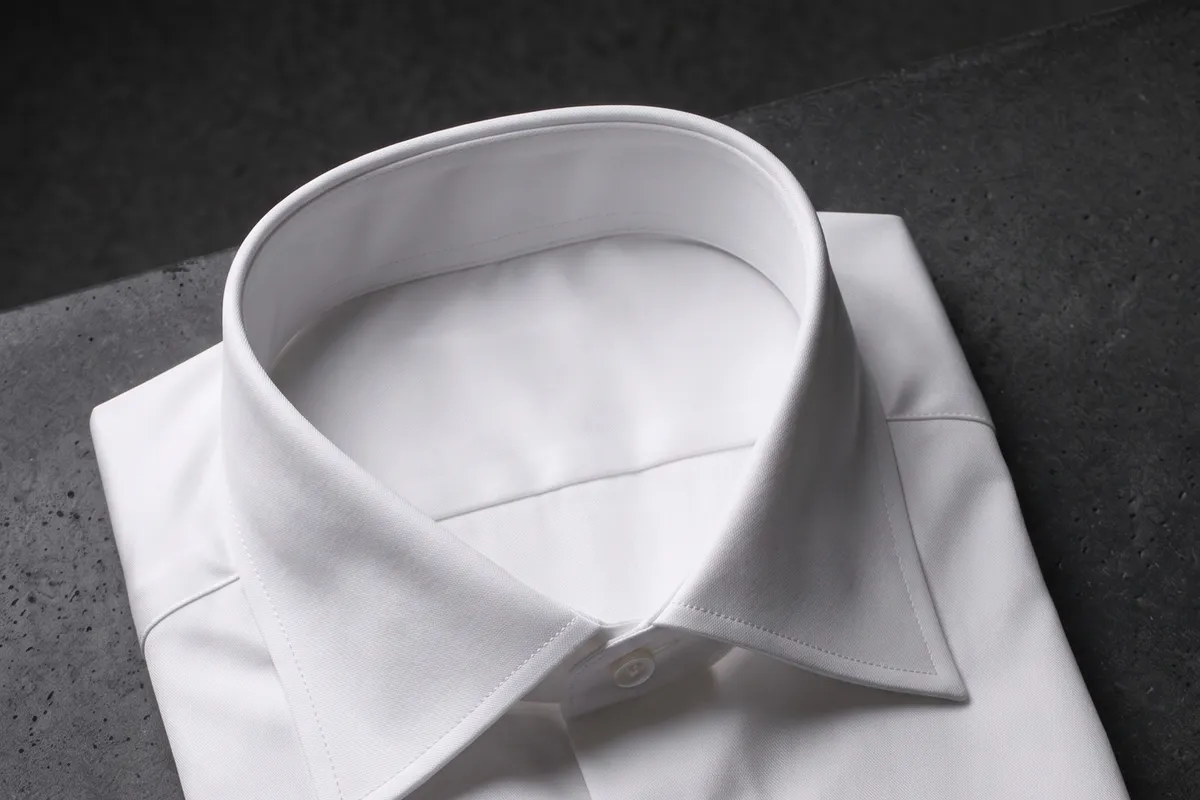
A dress shirt is not something you wear under a suit. It is the garment closest to the other person’s eye — the one deciding your first impression.
Most businesspeople invest in suits and treat shirts as disposable. But after many years advising businesspeople at every level — owners, executives, and those just starting out — I can say this with confidence: the difference in standing shows more in the shirt than in the suit. The collar and cuffs sit against your face and hands — precisely the places the other person watches longest in conversation.
If the suit is armor, the shirt is skin. Whether you chose it with that knowledge shows — quietly — in the first seconds of a first meeting.
What a Shirt Really Is: From Undergarment to Instrument of Standing

The fastest way to understand the standing a shirt carries is to know where it came from. The shirt began as an undergarment, worn directly against the skin. That is why classical European manners called for a coat or jacket over the shirt, and frowned on appearing in shirtsleeves.
The turning point came in the nineteenth century. In 1827, in Troy, New York, a woman named Hannah Montague cut the collar from her husband’s shirt so it could be washed separately — the accepted origin of the detachable collar. Troy grew into the “Collar City,” producing the overwhelming majority of America’s collars, and the starched white collar became the badge of those who did not work with their hands. The term “white collar” for office work comes, quite literally, from this white collar.
For roughly two centuries, then, the white shirt collar has functioned as an apparatus that makes visible what world a person works in and what position they hold. That history is still alive. It is why a shirt is not mere cloth but an instrument of standing.
Why the White Shirt Remains the Standard
However many colors hang in the closet, on the decisive day the hand reaches for white. The executives I have observed are no exception: for critical negotiations, keynotes, and shareholder meetings, they choose white almost without exception.
There are three reasons. First, white functions as the sign of cleanliness across every culture — wearing the color that shows dirt most readily, in flawless condition, is proof of self-command. Second, white reflects light upward and brightens the face; the same principle behind a photographer’s white reflector works directly beneath your chin. Third, white has no fashion cycle. Trend colors and patterns age in a few years; the white shirt carries the same authority in a century-old photograph as it does in today’s boardroom.
The most common misreading is that the white shirt is merely the safe choice. It is not. White is not one option among many; it is the standard from which everything else proceeds. Only those who can execute the standard flawlessly earn the right to choose color and pattern deliberately.
The Collar Is the Frame of the Face: The Structure of First Impressions
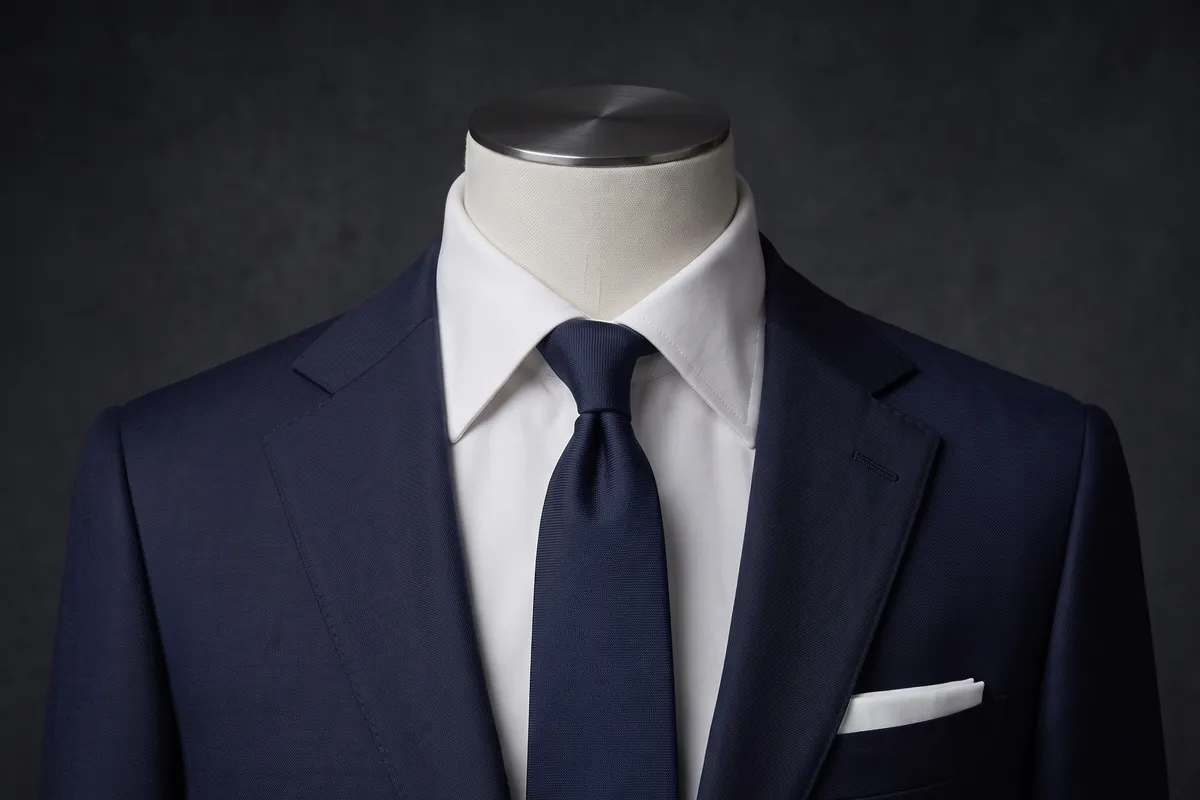
When people face each other, the gaze concentrates on the face and the area just around it. Directly beneath the face, framing it, sits the shirt collar. Just as a frame changes a painting, a different collar changes the same face.
Video calls have only strengthened this dynamic. The camera shows you from the chest up — your jacket’s silhouette and your shoes are invisible, but the collar sits near the center of the screen. On screen, the collar matters more than it does in person.
Together with the tie and the jacket’s lapels, the collar forms the V-zone, and anyone who works in menswear will tell you that the V-zone decides most of a first impression. The foundation of the V-zone is neither the tie nor the lapel. It is the collar, closest to the face.
A System for Collar Styles: Choosing by Level of Formality
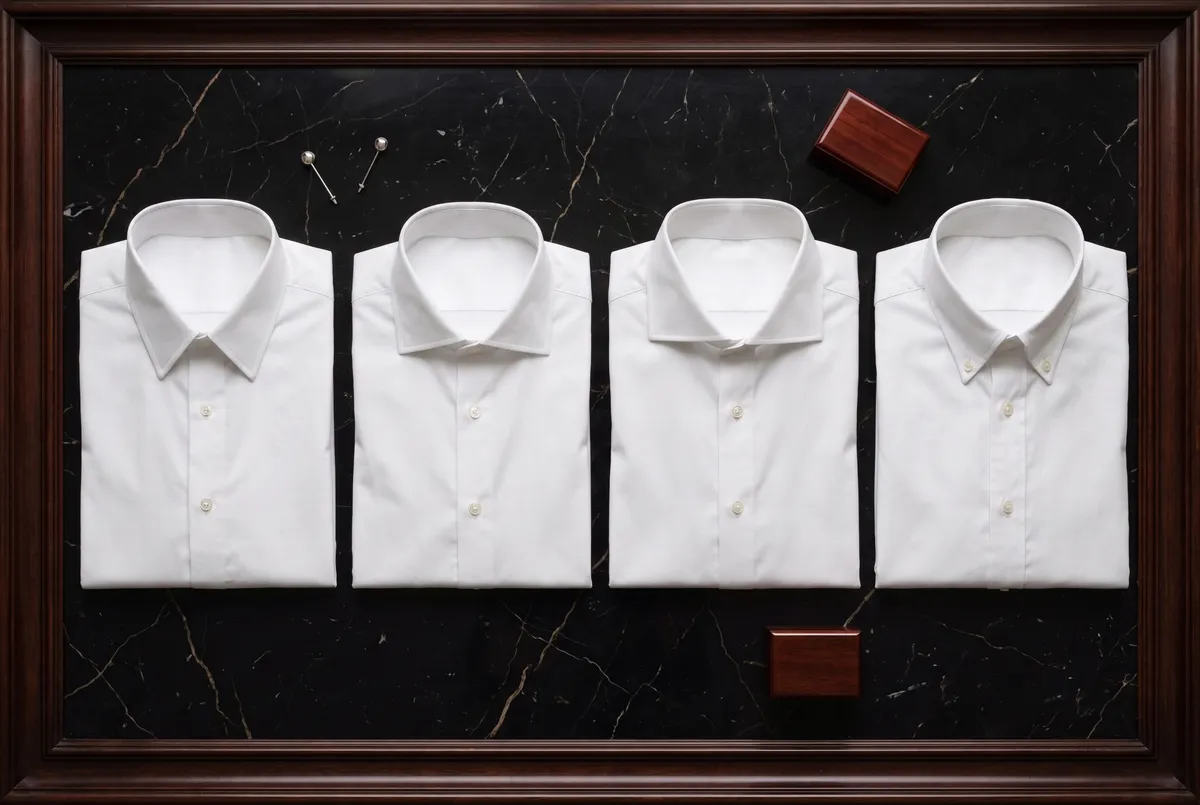
There is no need to memorize collar names. Only three principles govern formality: the spread (the angle between the points), the height of the collar band, and the roll (the curve with which the collar rises and folds). Know these, and you can judge the standing of a collar you have never seen.
The Three Collars That Never Fail in Business
The semi-spread collar is the backbone of modern business dress. With its points opened to roughly 90–100 degrees, it holds its shape with a tie or without one. When in doubt, semi-spread — that is my conclusion after many years.
The point collar, opened to roughly 70–90 degrees, is the long-established standard of Japanese business dress and reads as sincere and reserved. The spread collar (roughly 100–140 degrees) is the English classic; paired with a larger tie knot, it carries the highest standing among business collars. The still-wider cutaway collar brings a contemporary flair — and with it, a step toward casual territory.
Where the Button-Down Actually Belongs
The button-down collar was born on a playing field. In 1896, John Brooks of Brooks Brothers, watching polo in England, noticed that players buttoned down their collars to keep them from flapping in the wind. In 1900 the firm introduced the “polo collar” shirt.
The button-down, in other words, is casual by birth — a sporting collar raised in American Ivy culture. In a no-tie environment it is an excellent choice. But where standing is required — a decisive negotiation, a ceremony, a counterpart with European sensibilities — the principle is to leave it at home. Knowing this single point is a dividing line in sartorial literacy.
Cloth and Make Complete the Picture
Same white, same collar — the cloth and the make still change the standing.
Among shirtings, poplin (broadcloth) — fine, smooth, with a quiet luster — is the most formal and the mainstream of the business white shirt. Oxford is thicker and more durable but, like the button-down it so often carries, casual in origin. As the yarn count climbs, the cloth grows silkier and more delicate. In practice: a sensible count for daily wear, a high count for the decisive day.
What usually goes unnoticed is the make. From my years on the floor of a luxury menswear shop, I can tell you that a good shirt announces itself in the roll of the collar — the sculptural way it rises along the neck and folds over in a natural curve. The roll is decided by the interlining and the sewing. When you can handle a shirt in person, pinch the collar gently: one that is both firm and supple will frame the face in three dimensions when worn.
How Executives Wear White

From long observation, three habits are shared by the best-dressed people I have advised.
First, own several good white shirts and wear them in rotation. Resting each shirt preserves the collar’s shape and extends the life of the cloth. Second, respect the correct neck size: your true neck measurement plus about half an inch, with room for one finger when buttoned. Looser, and the collar fails to support the face; tighter, and the strain shows in your expression. An ill-fitting collar cancels the standing of any shirt, at any price. Why the allowance settles where it does, and when in the day to take the measurement, are treated in the essence of dress shirt size. Third, judge a shirt’s life by its collar and cuffs. Once fraying or yellowing no longer washes out, the shirt is retired from decisive occasions — however loved it may be.
The more experienced your counterpart, the more closely they read your collar and cuffs. People who know this start there.
In Closing: The White Shirt Is the Foundation of the Game
The essence of the shirt lies in its structure: it is the garment closest to the face. Know the history that made the white shirt the standard of standing, know the principle of the collar as the frame of the face, and complete it with cloth and make. There is nothing showy in any of this. But the quality of this foundation makes or breaks the standing of everything worn over it.
Some people lose ground because of how they dress, and never notice. Which means the person who understands the essence of the shirt gains ground — quietly, but surely.
The confidence you wear wins the game.
Frequently Asked Questions
The principal styles are the point collar, semi-spread collar, spread collar, cutaway collar, and button-down collar. Formality is governed by three principles: the spread (angle between the points), the height of the collar band, and the roll. The backbone of modern business dress is the semi-spread, which holds its shape with or without a tie.
White functions as the sign of cleanliness across cultures, reflects light to brighten the face, and has no fashion cycle. White is not one safe option among many; it is the standard from which everything proceeds. Only those who can execute the standard flawlessly earn the right to choose color and pattern deliberately.
The button-down was born in 1896 from the collars of polo players and is casual by origin. It is an excellent choice in no-tie environments, but where standing is required — decisive negotiations, ceremonies, or counterparts with European sensibilities — the principle is to avoid it.
Your true neck measurement plus about half an inch, with room for one finger when the collar is buttoned. Looser, and the collar fails to support the face; tighter, and the strain shows in your expression. An ill-fitting collar cancels the standing of any shirt, at any price.
Poplin (broadcloth), with its fine weave and quiet luster, is the most formal and the mainstream of the business white shirt. Oxford is thicker and durable but casual in origin. In practice, wear a sensible yarn count daily and reserve a high count for decisive occasions.